


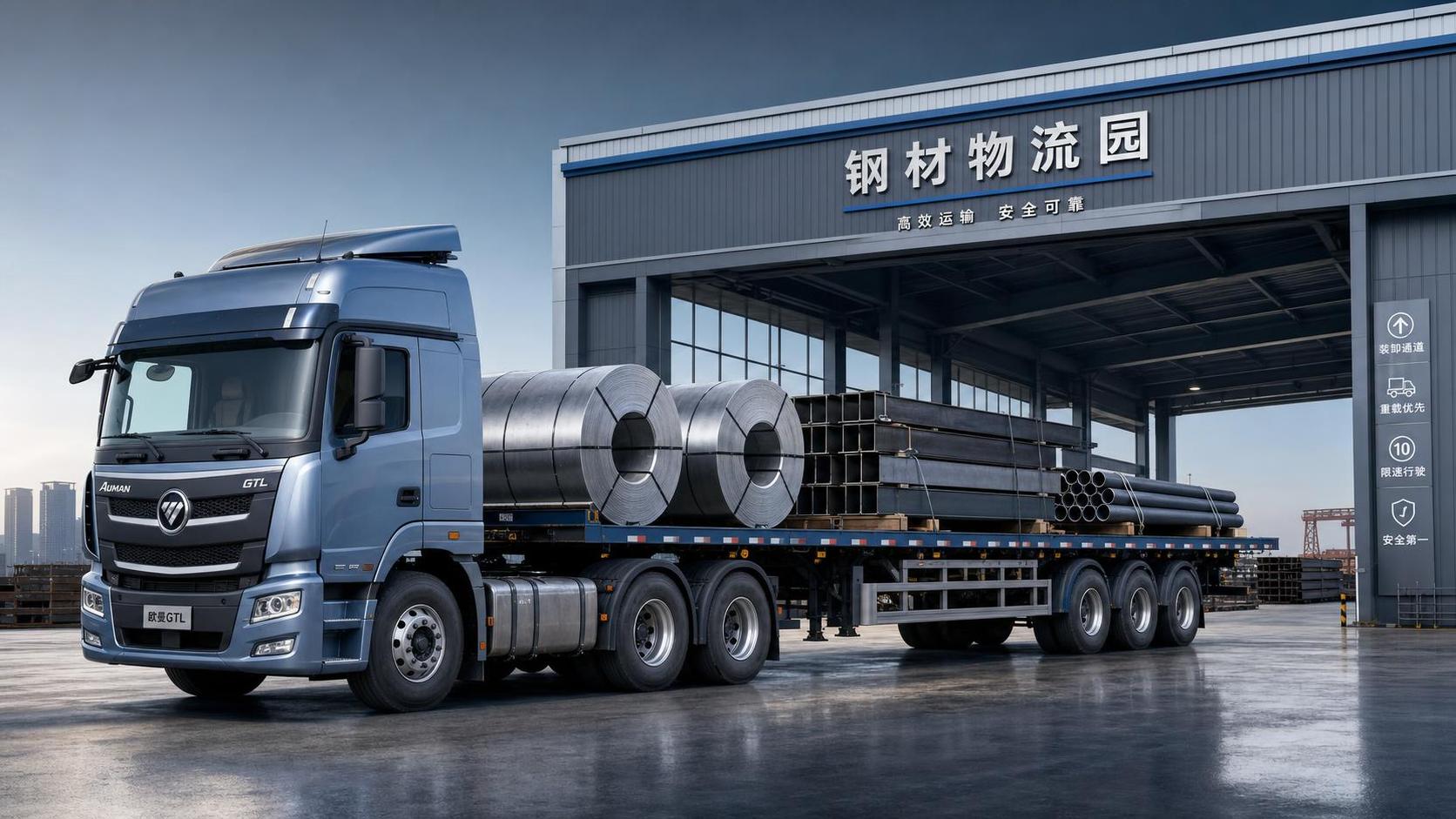
A Truck Tractor does more than pull a trailer. Its axle configuration shapes payload distribution, legal road weight, tire wear, turning behavior, and fuel use across every route.
In steel and sections haulage, that choice matters even more. Coils, beams, rebar, pipes, and long structural profiles place demanding loads on both tractor and trailer.
A configuration that works for general freight may struggle with concentrated weight, uneven deck loading, or strict bridge formulas. That is why axle layout deserves attention before comparing engine power or cab features.
What axle configuration really means
On a Truck Tractor, axle configuration describes how many axles are fitted, which axles steer, and which ones deliver drive power.
It also includes whether an axle can lift, how weight is shared between front and rear groups, and how the tractor matches the trailer behind it.
Common notations include 4x2, 6x2, 6x4, and 8x4. The first number shows wheel positions, while the second indicates driven wheel positions.
Simple notation, however, does not tell the whole story. Suspension type, axle spacing, fifth-wheel position, and lift axle control often matter just as much.
Why steel haulage places different demands on a Truck Tractor
Steel cargo rarely behaves like palletized consumer goods. Weight can be dense, concentrated, and difficult to spread evenly across the trailer deck.
A single coil can create a heavy point load. Bundled sections may be long enough to change axle balance during loading and unloading.
That changes how a Truck Tractor should be specified. Front axle capacity, tandem drive durability, and traction under partial loading become practical issues, not technical details.
Road compliance is another concern. Steel shipments often move through industrial corridors, ports, bridges, and urban access roads where axle limits are monitored closely.
In actual operations, the right setup helps avoid under-utilized payload, overload penalties, and repeated re-planning at the loading bay.
The main Truck Tractor axle layouts used in haulage
4x2 for lighter and more predictable loads
A 4x2 Truck Tractor has one steering axle and one drive axle. It is lighter, simpler, and usually more fuel-efficient than heavier layouts.
This configuration suits regional haulage where load weight is moderate and road conditions are consistent. It may also fit empty backhauls and high-mileage highway use.
For dense steel cargo, its limitation appears quickly. Available drive axle load margin and total gross combination weight may be too tight for demanding jobs.
6x2 as a balance between efficiency and legal payload
A 6x2 Truck Tractor adds a second rear axle, but only one rear axle is driven. The additional axle improves legal weight distribution.
This layout is common where regulations reward extra axle capacity without requiring full tandem drive. It can carry more legally than many 4x2 combinations.
When fitted with a lift axle, the tractor can reduce rolling resistance on lighter trips. That improves tire life and fuel economy when full capacity is not needed.
The trade-off is traction. On wet yards, ramps, or uneven industrial surfaces, a 6x2 may be less confident than a 6x4.
6x4 for heavier steel work and tougher site access
A 6x4 Truck Tractor uses two rear drive axles. It is heavier, but it offers stronger traction and better support for heavy gross vehicle combinations.
This is often the preferred layout for steel coils, heavy sections, and routes involving quarries, fabrication yards, unfinished roads, or steep gradients.
A 6x4 setup usually sacrifices some fuel efficiency because of extra driveline mass and rolling resistance. Still, that penalty may be justified by uptime and stability.
8x4 and specialist configurations
An 8x4 Truck Tractor is less common in standard long-haul work, yet it appears in specialized heavy transport and certain regulated markets.
Where very high kingpin load, extreme gross weight, or strict local axle rules apply, extra axle support can make the combination workable.
These configurations demand closer route planning. Purchase cost, maintenance complexity, and turning radius can rise sharply.
A practical comparison of common options
The differences become clearer when viewed against real haulage priorities rather than technical notation alone.
What usually drives the right choice
Axle selection should start with the load profile, not the catalog page. Steel transport often varies by density, length, loading method, and delivery environment.
Payload and axle law
A Truck Tractor can only use its rated capacity if local regulations allow each axle group to carry that share legally.
That means checking front axle load, drive axle limits, trailer tandem rules, and bridge-related spacing formulas together.
Traction at industrial sites
Steel destinations are not always clean loading docks. Scrap yards, warehouses, service roads, and open storage areas can punish low-traction configurations.
Where ground conditions are unreliable, a heavier Truck Tractor with tandem drive may prevent delays that outweigh any fuel savings on paper.
Fuel, tires, and maintenance
A lighter Truck Tractor often wins on fuel. Yet lifecycle cost depends on more than consumption alone.
Repeated overloading, poor weight balance, and wheel slip can shorten tire life and increase drivetrain repairs. A marginally cheaper layout may cost more over time.
Maneuvering in tight delivery points
Long steel products often reach sites with limited turning space. Extra axles improve carrying ability, but they can reduce maneuverability in narrow industrial areas.
That balance should be reviewed alongside trailer length, steering geometry, and loading crane access.
How axle configuration affects daily operations
In practice, the axle layout of a Truck Tractor influences much more than legal tonnage. It affects scheduling confidence and loading flexibility.
A configuration with better reserve capacity can accept a wider mix of steel orders without repeated equipment changes. That helps when shipment weights fluctuate week by week.
It also affects trailer compatibility. Some tractors handle flatbeds well but become less efficient with low-bed trailers or specialist coil carriers.
More worth noting is downtime risk. A Truck Tractor pushed close to its limit on every trip tends to create more strain on brakes, suspension, and driveline components.
Useful checks before comparing specifications
A clear evaluation process usually prevents the most expensive mistakes. Before deciding on a Truck Tractor, these checks are worth documenting.
- List actual cargo types by weight concentration, not only by nominal tonnage.
- Measure how often routes include slopes, rough yards, or low-grip surfaces.
- Confirm regional axle laws, bridge rules, and permit requirements before choosing layout.
- Check kingpin load and fifth-wheel position against trailer combinations already in use.
- Estimate lifecycle cost with tires, maintenance, and idle time, not fuel alone.
- Review whether mixed routes justify a lift axle or demand full tandem drive.
A sensible way to move forward
The best Truck Tractor axle configuration is usually the one that matches load pattern, route conditions, and legal limits with the fewest compromises.
For lighter and regular steel deliveries, a 4x2 or 6x2 may be efficient enough. For dense cargo, tougher access, or frequent heavy work, a 6x4 often makes stronger operational sense.
When comparing options, it helps to build a short decision sheet covering cargo density, trailer match, axle law, traction needs, and annual route mix.
That approach turns axle configuration from a specification detail into a workable transport decision, especially where steel and sections place real demands on every trip.
By clicking 'Allow All', you agree to the storage of cookies on your device to enhance site navigation, analyze site usage and assist with our marketing efforts. Coo Cookie Notice
Leave a message and we'll get back to you soon.