


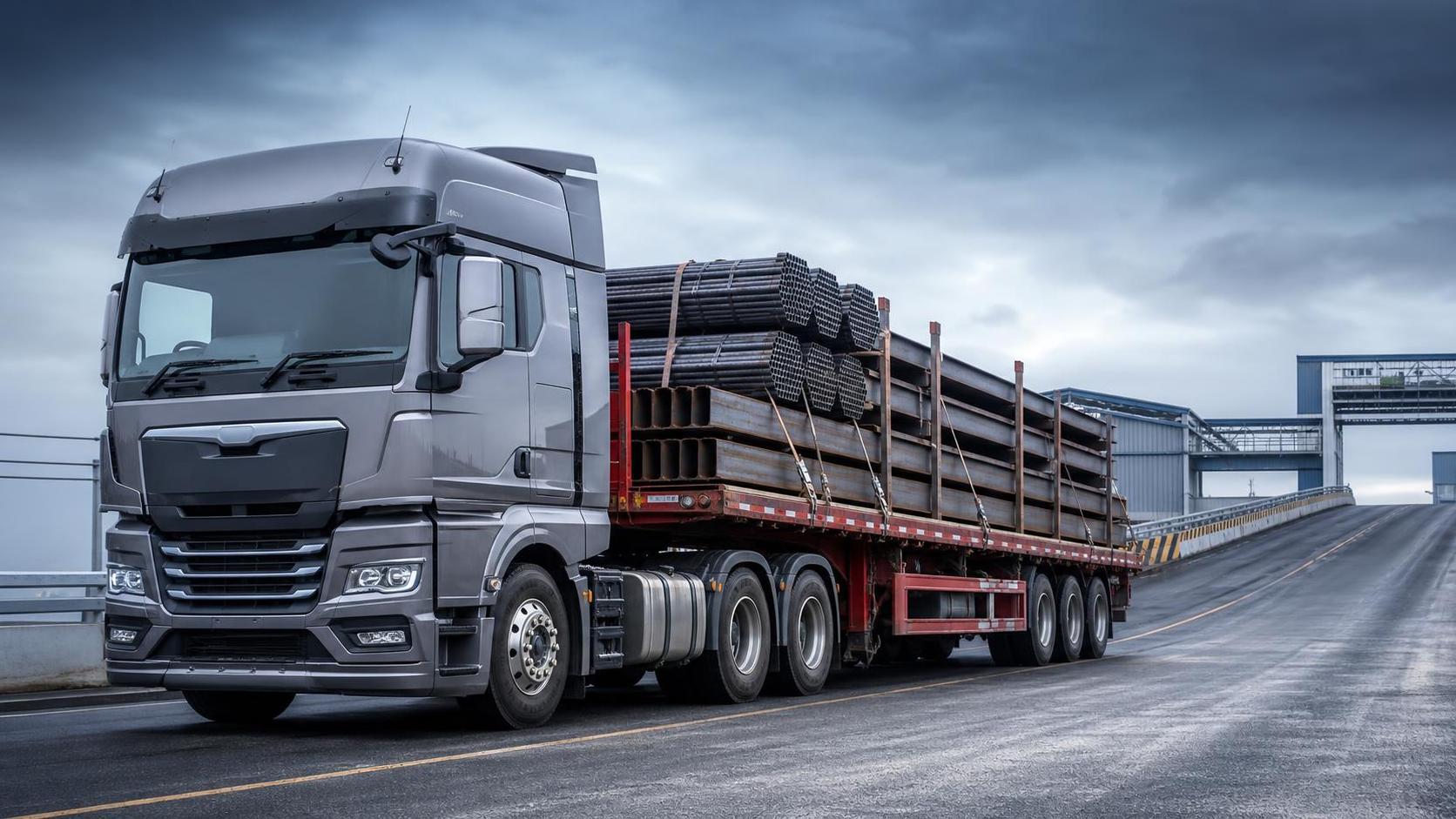
How to Match Tractor Head Power to Load and Route
Choosing the right Tractor Head is not just about engine size.
It means matching power, torque, axle setup, and gearing to real transport conditions.
In steel and section logistics, that match affects delivery speed, fuel cost, and risk exposure.
A Tractor Head that is too small struggles on gradients and wastes time.
A Tractor Head that is too large adds unnecessary purchase cost and fuel burn.
The better approach is to evaluate the load, route, duty cycle, and operating margin together.
This guide explains how to make that decision with practical selection logic.
Start with the Actual Load Profile
The first step is to define what the Tractor Head will really pull.
In the steel and section industry, cargo weight can look stable on paper but vary in practice.
Bundles of rebar, H-beams, coils, tubes, and structural sections create different drag and balance conditions.
That also changes demand on the Tractor Head during launch, climbing, braking, and lane changes.
Use gross combination weight, not cargo weight alone, as the decision baseline.
Gross combination weight should include trailer mass, accessories, tie-downs, and typical load variation.
A useful review should capture four values:
- Average transport weight
- Maximum legal transport weight
- Peak seasonal or contract weight
- Weight distribution across trailer axles
This matters because the same Tractor Head can behave very differently under different balance conditions.
Long steel sections often create a different pulling feel than dense coils of similar mass.
So the selection process should reflect both weight and load shape.
Do Not Judge Power by Horsepower Alone
Horsepower is important, but it is only one part of Tractor Head selection.
For loaded steel transport, low-end torque often has greater operational value.
A Tractor Head with strong torque at useful engine speeds launches more smoothly under heavy load.
It also reduces gear hunting on mild climbs and uneven roads.
In actual fleet work, drivability often matters more than headline power figures.
Look at these related factors together:
- Rated horsepower
- Peak torque and torque band
- Transmission ratios
- Rear axle ratio
- Engine speed at cruising load
This is where many decisions become clearer.
A higher-horsepower Tractor Head with poorly matched gearing may still perform worse on a mixed route.
By contrast, a well-matched Tractor Head can hold speed more efficiently and use less fuel.
Route Conditions Change the Power Requirement
The route often has more influence on Tractor Head sizing than expected.
Flat expressway work, port drayage, mountain access, and industrial yard movement create very different demands.
A route with frequent stops and starts needs strong launch performance and durable transmission behavior.
A long highway route needs stable cruising efficiency and comfortable thermal control.
Routes with long grades need reserve power, braking support, and cooling headroom.
Check route variables in a structured way:
- Average trip distance
- Road class and pavement quality
- Slope frequency and maximum grade
- Urban congestion and stop density
- Climate, altitude, and seasonal weather
From a recent operating trend, mixed routes are becoming more common.
That means the Tractor Head must cover more than one ideal condition.
When route quality is inconsistent, extra torque reserve is usually a smarter choice than chasing top speed.
Match the Driveline to the Duty Cycle
A Tractor Head should be evaluated as a system, not just an engine.
The engine, transmission, drive axle, tires, and braking package must work together.
This is especially important when hauling steel products with varying trailer types.
For example, a 6x4 Tractor Head may suit heavy and mixed terrain operations better.
A 4x2 Tractor Head may be enough for lighter, long-distance highway transport.
Key matching points include:
- Axle configuration based on weight and traction need
- Transmission type for route intensity and driver consistency
- Retarder or engine brake for downhill control
- Suspension selection for load stability
- Tire specification for rolling resistance and durability
In practical business use, one mismatch can undermine the whole Tractor Head decision.
A powerful engine cannot fully compensate for weak traction or unsuitable gearing.
That is why duty cycle analysis should be part of every technical review.
Use a Practical Power Matching Framework
A simple framework helps avoid oversizing or underestimating the Tractor Head requirement.
Start with the heaviest regular load, not the rarest extreme case.
Then adjust for route severity, stop frequency, and desired average trip speed.
This kind of matrix makes the selection process more defensible.
It also helps compare two Tractor Head options with less guesswork.
Watch for Hidden Risks in Tractor Head Selection
Several common mistakes can distort a Tractor Head evaluation.
The most common one is selecting based only on rated engine output.
Another is using empty-route assumptions for a fully loaded steel transport scenario.
A third is ignoring future route or payload changes during contract expansion.
Warning signs usually include:
- Frequent downshifting on ordinary slopes
- Poor launch response at legal payload
- High fuel use without better cycle time
- Brake stress on downhill sections
- Low average speed despite high power rating
More clearly, a Tractor Head should be selected for the job it repeats most often.
Reserve margin is necessary, but excessive margin increases cost without proportional gain.
A Decision Process That Holds Up in Real Operations
A reliable Tractor Head decision should follow a repeatable method.
That makes internal comparison easier and reduces subjective preference.
- Define gross combination weight across normal and peak operations.
- Classify routes by distance, gradient, stop frequency, and road quality.
- Match Tractor Head torque, gearing, and axle layout to those conditions.
- Check braking, cooling, and traction reserves for difficult segments.
- Compare fuel economy against cycle time, not fuel data alone.
- Allow reasonable growth margin for future contracts and route changes.
This process keeps the Tractor Head decision tied to measurable operating demand.
It also supports better communication between procurement, operations, and maintenance teams.
Final Takeaway
The right Tractor Head is the one that matches real load and route behavior.
That means balancing power, torque, gearing, traction, and braking around actual transport work.
For steel and section logistics, this approach improves uptime, fuel control, and transport safety.
Before making a final choice, review your heaviest routine load and your most demanding route segment.
Then select the Tractor Head that can handle both with stable, repeatable efficiency.
That is usually where the strongest long-term value appears.
By clicking 'Allow All', you agree to the storage of cookies on your device to enhance site navigation, analyze site usage and assist with our marketing efforts. Coo Cookie Notice
Leave a message and we'll get back to you soon.