


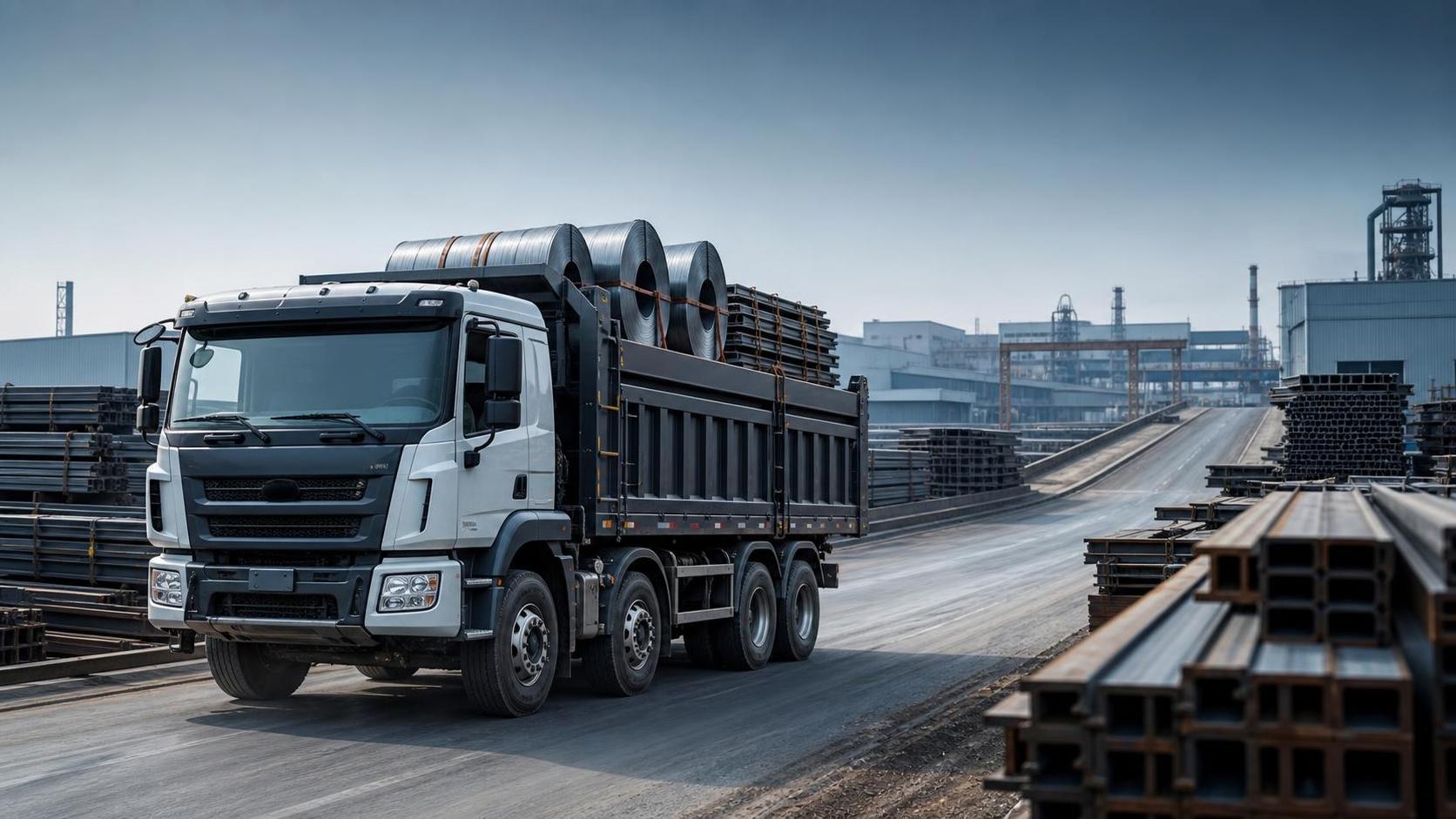
Dump Truck Fuel Use: What Affects Daily Operating Cost
For steel and section operations, fuel use shapes the real daily cost of a Dump Truck more than many buyers expect.
A truck with a strong purchase price can still become expensive if fuel burn stays high across shifting routes and heavy loading cycles.
That matters when transport supports rebar, coil, plate, billet, or structural section movement between yard, mill, and project site.
In practical terms, Dump Truck fuel use depends on payload, road grade, idle time, engine condition, and how disciplined the maintenance program is.
The more useful signal is that these variables interact, so one weak operating habit can erase the value of a good engine specification.
This article breaks down the main drivers behind fuel consumption and shows how to estimate daily operating cost with more confidence.
Why Dump Truck Fuel Use Is a Core Cost Metric
For procurement and budgeting, fuel is not just a variable expense. It is a direct indicator of route efficiency, equipment fit, and operating discipline.
In steel logistics, load weights often stay near legal or practical limits. That makes fuel sensitivity more visible than in lighter haul applications.
A Dump Truck moving dense material behaves differently from one hauling lighter aggregate. The engine works harder, especially during acceleration and climbing.
Daily fuel use also affects cost comparison between owned fleets, subcontracted transport, and mixed fleet strategies.
When fuel use rises by even a small percentage, the annual effect can be large across multi-shift operations.
- It changes cost per trip and cost per ton delivered.
- It affects bidding assumptions for internal transfer and external delivery.
- It influences replacement timing for older Dump Truck units.
- It exposes whether maintenance spending is protecting margin or simply reacting to failure.
Payload Is Usually the First Cost Driver
Payload has the clearest impact on Dump Truck fuel use because heavier loads demand more torque and more energy in every movement phase.
That includes starting, low-speed maneuvering, climbing, and repeated stop-and-go movement inside plants or yards.
Steel and section cargo often creates another issue. Weight may be legal, but poor load distribution can still increase rolling resistance.
An overloaded rear axle, for example, raises tire drag and can make the truck feel underpowered on grades.
Underloading is not automatically efficient either. More lightly loaded trips may lower liters per trip but increase liters per ton moved.
In real evaluation work, the useful question is not only how much fuel a Dump Truck burns, but how much work that fuel delivers.
What to check during assessment
- Average payload per trip, not rated payload alone.
- Load distribution across axles.
- Trips per shift under actual route conditions.
- Fuel per ton delivered, not only fuel per day.
Route Profile Changes Everything
Two Dump Truck units with the same engine can show very different fuel use when route conditions differ.
Grade, surface quality, traffic delay, turning frequency, and haul distance all reshape daily consumption.
A short route is not always cheaper. A short route with queuing, ramps, and rough yard access may burn more fuel than a longer steady run.
This becomes more obvious in steel service centers where trucks often wait for loading clearance or crane scheduling.
Surface condition also matters. Mud, loose gravel, potholes, and temporary construction roads increase rolling resistance and throttle demand.
For that reason, route mapping should sit inside any serious Dump Truck cost review.
Useful route variables
- Loaded distance versus empty return distance.
- Average slope and number of steep segments.
- Percentage of paved versus unpaved travel.
- Average stop events per trip.
- Queue time at loading and unloading points.
Idling Often Hides in Daily Operating Cost
Many cost reviews focus on distance and ignore idle hours. That is where Dump Truck fuel use is often underestimated.
Idling burns less fuel than driving, but it creates zero transport output while still adding expense.
Long waits at weighbridges, plant gates, loading bays, or dumping zones can distort daily cost more than a modest route extension.
This also means scheduling quality has a direct fuel impact. Better dispatching can reduce waste without changing truck specification.
A modern Dump Truck may have decent engine efficiency, yet poor site coordination can still push cost per productive hour too high.
Questions worth asking
- How many idle minutes occur per trip?
- Is idle time caused by traffic, loading, unloading, or driver behavior?
- Can staging or appointment systems reduce queue time?
- Are telematics reports separating idle fuel from driving fuel?
Engine Efficiency and Driveline Matching Matter
Engine size alone does not define Dump Truck fuel performance. Matching matters more than headline power.
An oversized engine may handle peak loads comfortably, but it can consume more fuel than needed on normal duty cycles.
An undersized engine creates a different problem. It spends more time under heavy strain and less time in its efficient operating band.
Transmission ratios, axle ratios, tire size, and body configuration all influence how efficiently power becomes movement.
This is especially relevant when comparing on-road Dump Truck models with mixed-use or severe-duty configurations.
A lower purchase price can lose its appeal if driveline matching causes consistently higher fuel use across the year.
Maintenance Quality Has a Direct Fuel Effect
Maintenance is often treated as a separate budget line, but it directly shapes Dump Truck fuel consumption.
A clogged air filter, low tire pressure, dragging brake, dirty injector, or poor wheel alignment can steadily increase fuel burn.
These are not dramatic failures. They are quiet losses that build over hundreds of operating hours.
For buyers assessing used equipment, maintenance records can be as important as age or mileage.
A well-maintained older Dump Truck may outperform a newer unit with neglected service discipline.
Maintenance points linked to fuel cost
- Tire pressure and tread condition.
- Fuel injection and combustion health.
- Air intake cleanliness.
- Brake drag and bearing condition.
- Alignment and suspension wear.
How to Estimate Daily Dump Truck Operating Cost
A reliable estimate starts with actual operating data, not brochure figures. Manufacturer numbers rarely reflect steel haul reality.
Use a simple daily model first, then refine it with route and seasonal adjustments.
Then calculate cost per trip and cost per ton. Those two metrics usually reveal more than fuel cost per kilometer alone.
Practical Signals for Procurement and Fleet Planning
When comparing options, evaluate the Dump Truck as a working system, not a standalone machine.
The key question is whether the truck matches the load profile, route profile, and dispatch rhythm of your operation.
Recent market changes make this more important. Fuel price volatility can quickly alter the total cost ranking between models.
A stronger signal is consistency. A Dump Truck with predictable fuel performance is easier to budget and easier to deploy across contracts.
- Request real fleet fuel logs when possible.
- Test evaluation units on actual routes, not ideal routes.
- Separate engine efficiency from dispatch inefficiency.
- Review maintenance quality before judging fuel performance.
- Use cost per ton delivered for final comparison.
Conclusion
Dump Truck fuel use is shaped by more than engine specification. Payload, route condition, idle time, driveline match, and maintenance all change daily operating cost.
For steel and section operations, dense cargo and repetitive hauling make these differences commercially important.
A sound evaluation method connects fuel use with trips, tons, route difficulty, and asset condition.
That approach leads to better procurement decisions, tighter budgets, and more realistic fleet planning.
Before selecting the next Dump Truck, review real route data, validate idle patterns, and compare cost per ton delivered under actual working conditions.
By clicking 'Allow All', you agree to the storage of cookies on your device to enhance site navigation, analyze site usage and assist with our marketing efforts. Coo Cookie Notice
Leave a message and we'll get back to you soon.