


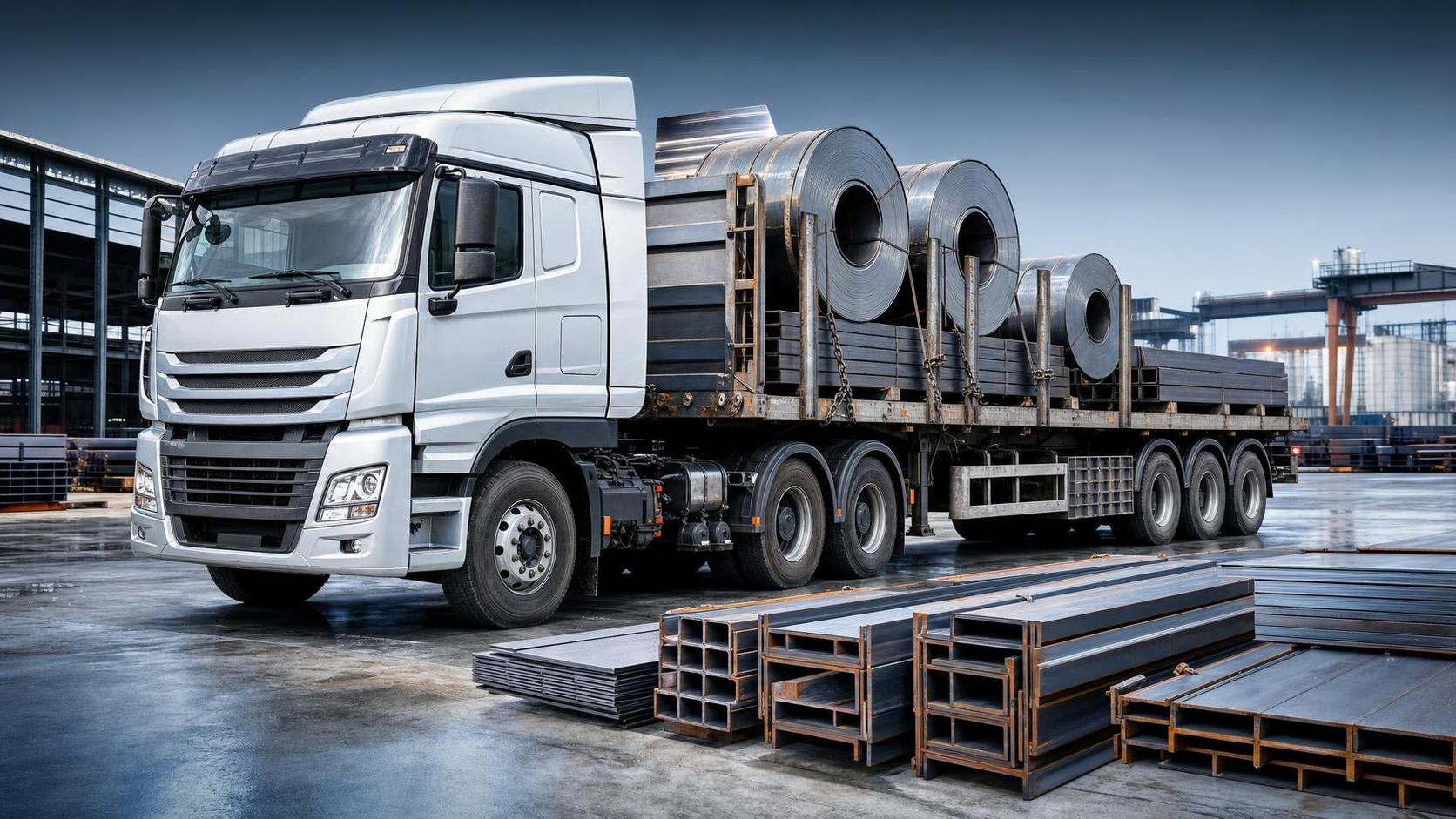
Why does Heavy Duty Truck downtime escalate so quickly in steel transport?
Heavy Duty Truck downtime rarely starts with a dramatic failure. It usually begins with a small warning that gets ignored during busy dispatch cycles.
In steel and section transport, that risk grows faster. Loads are dense, routes are repetitive, and stop-start movement adds extra strain to brakes, suspension, and driveline parts.
A truck carrying coils, beams, plates, or structural sections works under a different stress pattern than general freight equipment. Gross weight may remain legal, yet component fatigue still builds early.
The practical concern is simple. One hour lost on a Heavy Duty Truck can disrupt yard loading, miss unloading windows, and turn a minor repair into an expensive roadside event.
That is why maintenance triggers matter more than fault codes alone. The useful question is not only what failed, but what changed before failure appeared.
In daily service, the earliest clues usually show up as heat, vibration, fluid condition, uneven wear, longer stopping distance, or driveline noise under load.
Which early maintenance triggers deserve attention before a Heavy Duty Truck breaks down?
Not every abnormal sign needs immediate teardown. Still, some triggers consistently predict downtime when the truck operates in steel logistics.
More often than not, the issue is progressive wear rather than sudden damage. That makes early judgment far more valuable than emergency repair response.
- Brake fade after repeated loaded stops, especially on urban delivery or plant entry routes.
- Darkened or contaminated fluid in axles, transmission, or hydraulic systems.
- Uneven tire shoulder wear linked to overload concentration or suspension shift.
- Clunking during torque transfer, often pointing to U-joint, mount, or shaft imbalance.
- Higher engine temperature under familiar loads, even when coolant level appears normal.
- Air system lag, moisture build-up, or inconsistent brake release timing.
These signs matter because steel cargo creates concentrated loading. A Heavy Duty Truck may feel stable enough on short runs while hidden stress continues to spread through connected parts.
A useful field habit is to compare change rate, not just current condition. If wear has accelerated since the previous inspection, treat that as a maintenance trigger.
How can you tell whether the problem is wear, fluid, brakes, or drivetrain stress?
The fastest way is to sort symptoms by operating moment. Ask when the problem appears: during loading, launch, braking, cruising, turning, or hill climbing.
That simple sequence often narrows the fault family before disassembly. It also prevents replacing parts that were never the real source of downtime.
This kind of table works best when paired with service history. Repeated symptoms on the same Heavy Duty Truck usually indicate an unresolved root cause, not bad replacement parts.
In practice, fluid evidence is especially valuable. Burnt smell, glitter, water ingress, and viscosity change often reveal failure direction earlier than noise alone.
Why do brakes and suspension fail earlier on trucks hauling steel profiles and sections?
The answer is load behavior. Steel products are compact, heavy, and less forgiving in weight distribution than many palletized goods.
A Heavy Duty Truck carrying long sections or bundled profiles may experience uneven axle influence, even when the total load appears correctly planned.
Braking systems suffer because dense cargo preserves momentum. Suspension suffers because concentrated force transfers through fewer contact zones over rough yards and ramps.
Another overlooked factor is loading equipment impact. Forklift contact, abrupt drop placement, and frequent repositioning can create shock loads that normal route analysis never captures.
When these conditions repeat, common failures include:
- Premature bushing wear and spring seat movement.
- Brake hardware distortion from excess thermal cycling.
- Air suspension imbalance caused by line leaks or valve delay.
- Cracks around brackets, mounts, or heavily stressed frame zones.
For that reason, inspection intervals should reflect cargo reality, not just mileage. A short-haul Heavy Duty Truck in steel service may need earlier brake and suspension checks than a longer-haul unit.
What maintenance mistakes usually turn a manageable issue into expensive downtime?
The most expensive mistake is treating repeated symptoms as isolated events. A second pad change will not solve a brake drag problem caused by release timing or heat imbalance.
Another common error is relying only on standard PM intervals. Heavy Duty Truck service in steel movement often needs trigger-based inspection between scheduled visits.
There is also a documentation gap. If fluid color, brake temperature trend, and load pattern are not recorded, pattern recognition becomes guesswork.
The following checklist helps separate routine maintenance from actual downtime prevention.
- Compare current wear against the last service, not against a generic acceptable limit.
- Review cargo type and loading method before approving recurring part replacement.
- Inspect adjacent systems when one part fails under heat or shock.
- Treat moisture, metal particles, and seal seepage as root-cause leads.
- Use road-test feedback under load whenever the symptom appears only during loaded operation.
A useful rule is this: if a Heavy Duty Truck returns with the same complaint within one service cycle, the first repair likely addressed the result, not the cause.
How should a practical downtime prevention plan be set up for a Heavy Duty Truck fleet?
Start with trigger categories instead of a long universal checklist. That keeps inspection focused and easier to apply across mixed routes.
A workable plan usually covers heat, fluid, movement, and load response. Those four areas catch most downtime drivers before they become immobilizing failures.
In actual application, the strongest results come from combining scheduled service with event-based review after overload suspicion, hard braking, unusual vibration, or repeated yard maneuvering.
For steel and section transport, it helps to maintain a simple judgment standard for each Heavy Duty Truck:
This approach keeps the plan practical. It also links maintenance decisions to actual downtime risk, not just calendar intervals.
What should be reviewed next when downtime keeps repeating?
Look beyond the repair bay. Repeated Heavy Duty Truck downtime often reflects a mismatch between service assumptions and operating conditions.
Review three things together: load profile, route severity, and maintenance records. If one of them is missing, diagnosis stays incomplete.
It is also worth checking whether steel cargo securement, loading sequence, or axle distribution changed over time. Small handling changes can shift wear patterns noticeably.
The main goal is not simply to repair faster. It is to identify the trigger that keeps returning the Heavy Duty Truck to unscheduled service.
A sensible next step is to rank recurring faults by cost, frequency, and operating impact. Then tighten inspection standards around the highest-loss areas first.
When that review is done well, downtime becomes more predictable, parts usage becomes easier to justify, and maintenance action moves from reactive replacement to informed prevention.
By clicking 'Allow All', you agree to the storage of cookies on your device to enhance site navigation, analyze site usage and assist with our marketing efforts. Coo Cookie Notice
Leave a message and we'll get back to you soon.