


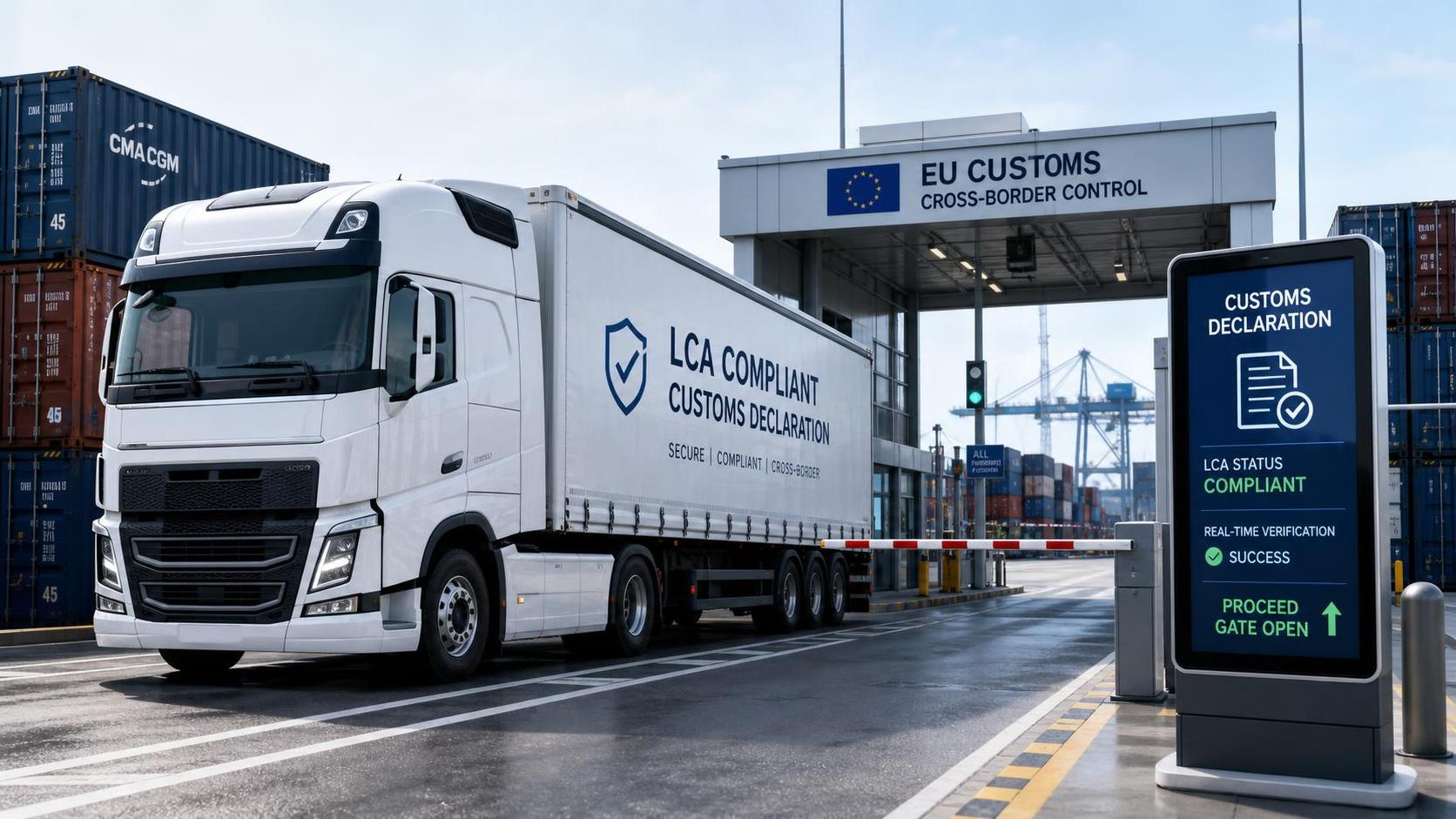
On August 6, 2026, the European Commission formally activated a mandatory digital filing portal for semi-trailer life cycle assessment compliance, tying customs declarations for covered products entering the EU from August 2026 to the submission and real-time validation of third-party verified LCA reports. For exporters, customs brokers, compliance teams, and supply chain planners, the development merits close attention because it shifts LCA from a documentation issue into a live customs clearance checkpoint.
What the new filing requirement now includes
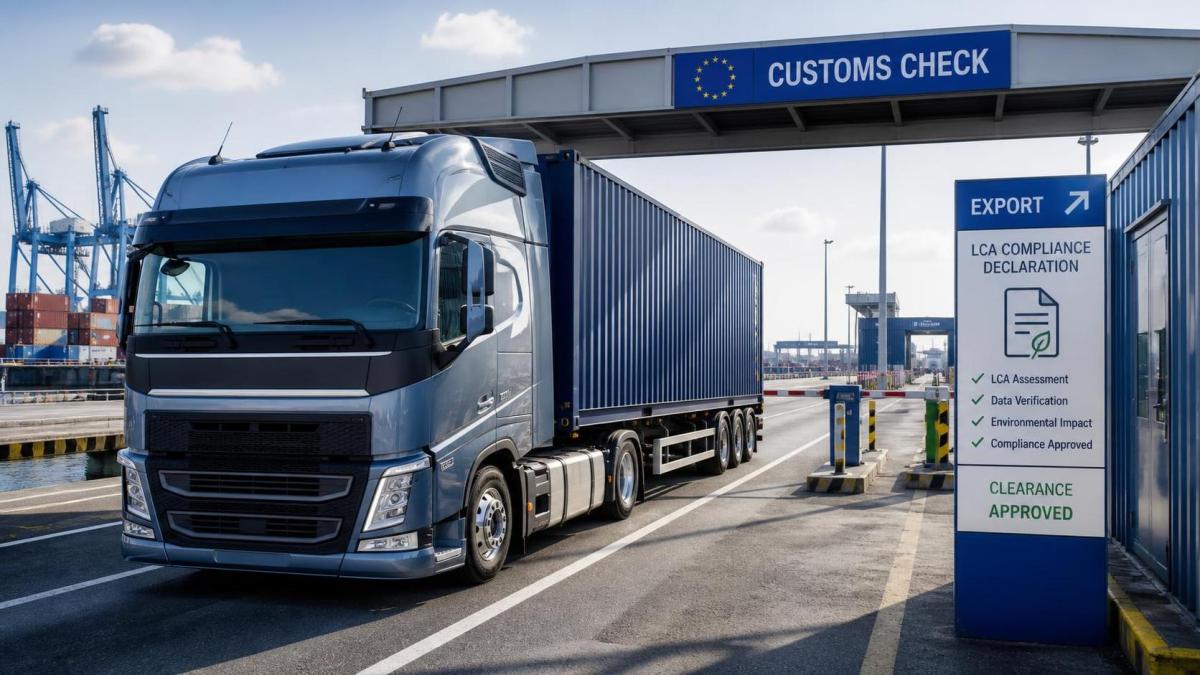
According to the information provided, the European Commission launched the mandatory digital portal LCA-Portal.eu on August 6, 2026 for semi-trailer LCA compliance declarations. The requirement applies to semi-trailer products entering the EU from August 2026. At the time of customs filing, companies must upload an LCA report that has been verified by an EU-recognized third-party body.
The same information states that report validity must be checked in real time through an API. The portal has already been integrated with TRACES-NET and TARIC. Declarations that do not meet the requirement will trigger an automatic rejection.
Where the pressure is likely to show first
Exporters facing a new customs timing risk
From an industry perspective, exporters of semi-trailer products are the first group likely to feel the operational impact. The reason is straightforward: the LCA report is no longer a separate compliance file that can be handled later, but a prerequisite tied directly to customs submission. The immediate business effect is likely to appear in filing timing, document readiness, and shipment release coordination.
What deserves closer attention is whether internal export documentation workflows are prepared for real-time validation rather than manual follow-up. For China-based suppliers in particular, the issue is not only whether an LCA report exists, but whether a verified report is available in a form that can pass the portal check when the customs declaration is lodged.
Verification and compliance service providers entering the critical path
Observably, EU-recognized third-party verification bodies and related compliance service providers move closer to the center of transaction execution under this mechanism. Because the report must be verified before submission and then checked through an API, verification status becomes part of the customs process itself rather than a parallel compliance exercise.
The practical implication is that any delay, mismatch, or invalid status in the verification chain could affect declaration acceptance. Service providers involved in LCA preparation, verification coordination, or filing support are therefore likely to face higher demands for timing control and data consistency.
Logistics and customs intermediaries dealing with rejection risk
For customs brokers, freight forwarders, and other supply chain intermediaries, the main issue is execution risk at the declaration stage. Since non-compliant submissions will be automatically rejected, the consequences may show up in resubmission work, scheduling disruptions, and communication pressure between shipper, broker, and consignee.
Analysis shows that these participants will need clearer pre-filing checks on whether the required verified LCA documentation has already been completed and can be validated through the connected system environment.
What companies should monitor in practice
Whether document readiness matches shipment timing
Companies involved in EU-bound semi-trailer trade should pay close attention to the sequencing between production, verification, and customs filing. The policy signal is clear in the information provided, but actual business pressure will depend on whether verified reports are ready before the customs declaration window opens.
The distinction between having a report and passing system validation
What deserves closer attention is the difference between possessing an LCA report and successfully clearing the digital validation step. The summary provided makes clear that the process involves API-based real-time verification. In practice, this means firms should focus not only on report preparation, but also on whether the filing data and verification status can be recognized by the connected system at the moment of declaration.
Coordination with customers, brokers, and verification parties
For companies shipping into the EU, communication discipline becomes more important once automatic rejection is built into the customs process. Exporters may need tighter coordination with customers, customs agents, and EU-recognized verification bodies on filing schedules, document status, and contingency planning if a declaration cannot pass validation on the first attempt.
Any later clarification in official wording or operating rules
Observably, the launch itself is a confirmed event, but companies should continue watching for later official clarifications on operating details, filing practices, or implementation interpretation. That is especially relevant where day-to-day execution depends on how customs-facing systems handle exceptions, corrections, or document status checks.
Why this looks bigger than a simple filing update
Analysis shows that this development is better understood as an operational tightening of compliance enforcement rather than just the creation of a new online portal. The core change is that verified LCA documentation is now linked directly to customs acceptance through real-time system validation and integration with TRACES-NET and TARIC.
It is more appropriate to understand this as both a near-term operational change and a longer-term policy signal. The near-term change lies in clearance execution, documentation sequencing, and cost control. The longer-term signal is that product-level environmental compliance is being embedded more deeply into trade processing infrastructure. Even so, based on the information provided, it would be premature to draw broader conclusions beyond the semi-trailer scope described here.
How the market may need to read this development now
At this stage, the most balanced reading is that the EU has moved a specific compliance requirement for semi-trailers into a live customs gatekeeping mechanism. That alone is enough to affect clearance efficiency, certification cost exposure, and delivery rhythm for affected exporters.
For the industry, the key point is not to overstate the policy, but also not to treat it as a routine administrative update. It is more appropriate to understand the move as an implemented rule with immediate operational consequences, while still keeping watch on how its detailed execution develops in actual trade flows.
Basis of this article and points for continued verification
This article is based on the user-provided news title, event date, and event summary concerning the European Commission's August 6, 2026 launch of the semi-trailer LCA compliance portal and its customs validation mechanism. For news of this type, relevant source categories typically include official announcements, customs system notices, company disclosures, industry association updates, authoritative media coverage, and standards-related documentation.
A specific official source link was not provided in the input, so the exact underlying publication and any subsequent implementation updates still require continued verification. Follow-up attention should remain on any additional official wording, operating guidance, and rule interpretation related to declaration handling and system validation.
By clicking 'Allow All', you agree to the storage of cookies on your device to enhance site navigation, analyze site usage and assist with our marketing efforts. Coo Cookie Notice
Leave a message and we'll get back to you soon.