


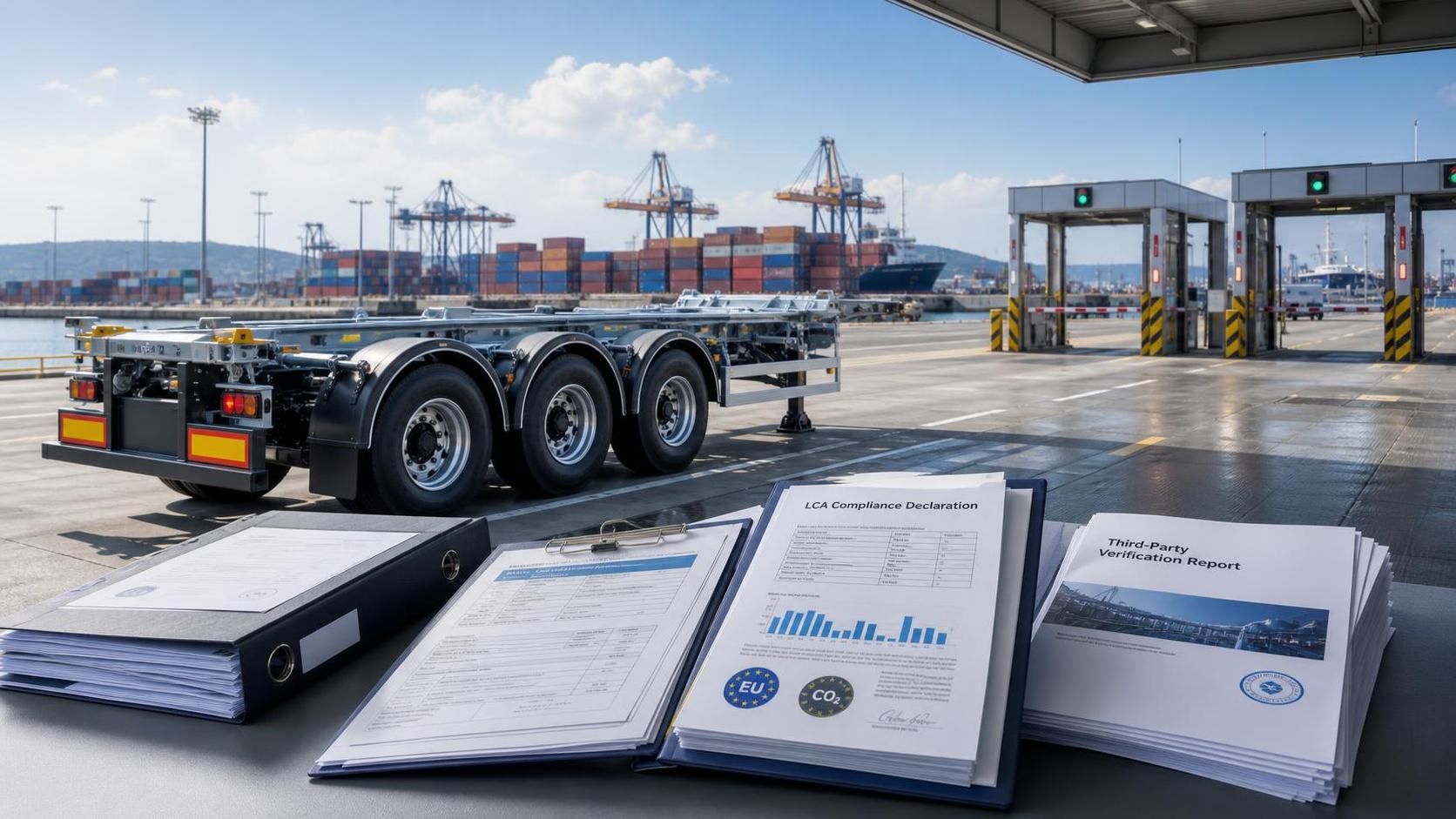
From 1 August 2026, the EU will require imported semitrailers to be accompanied by a lifecycle assessment (LCA) compliance filing and a third-party verified LCA report under Regulation (EU) 2026/1387 issued by the European Commission. For exporters, importers, buyers, certification-related service providers, and logistics teams handling EU-bound shipments, this is not just a documentation update at customs; it introduces a new gatekeeping requirement that can affect supplier access, shipment release, certification timing, and quoted export costs.
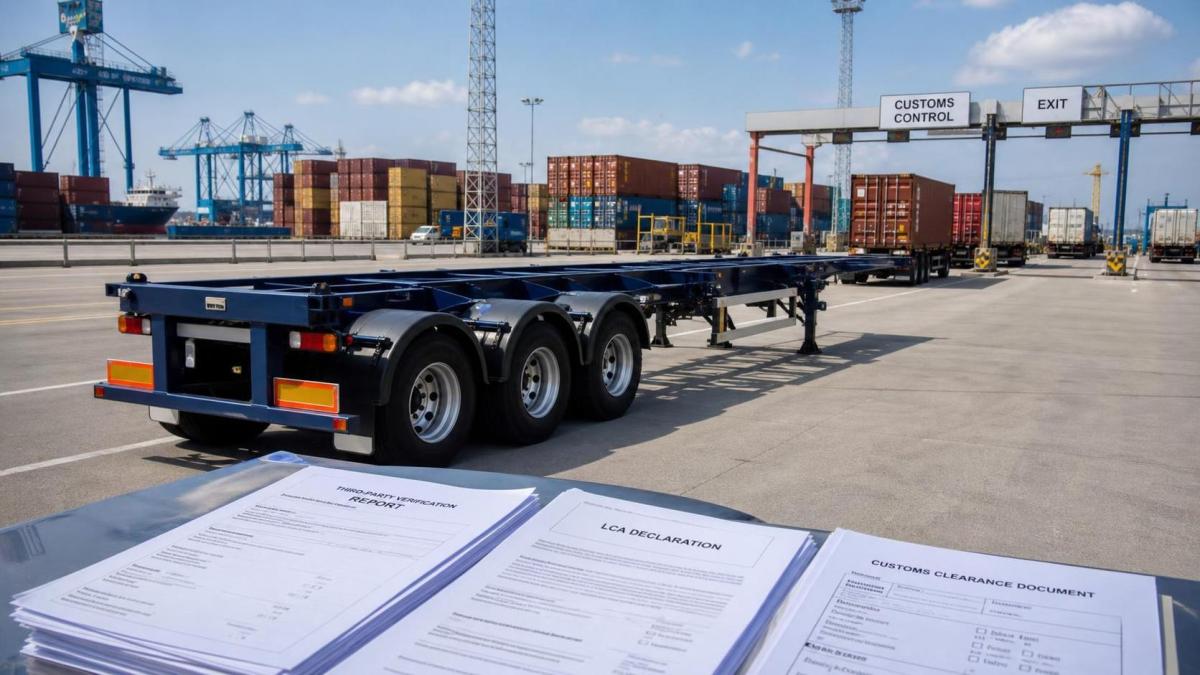
What the New EU Requirement Confirms
The confirmed facts are limited but commercially significant. The European Commission has formally issued Regulation (EU) 2026/1387. Under this rule, from 1 August 2026, all semitrailers imported into the EU, including products exported from China, must complete an LCA compliance declaration. The filing must be submitted together with an LCA report verified by an EU-recognized body. If the requirement is not met, customs clearance may be denied, or the shipment may face substantial port delay and compliance rectification costs. The rule directly affects supplier admission procedures, certification lead times, and the structure of export pricing.
Where the Pressure Will Appear First
Supplier access will move closer to compliance screening
For manufacturers and export traders supplying semitrailers to the EU, the immediate issue is that market access now depends on more than product readiness and commercial terms. The transaction chain will have to account for whether LCA filing materials can be prepared and whether the required third-party verification can be completed in time for shipment and customs processing. What deserves closer attention is that supplier qualification may increasingly be reviewed together with compliance document readiness rather than as a separate commercial step.
Import and customs teams will face a tighter document chain
For importers, distributors, and customs-facing operators, the reported change centers on shipment release risk. Because customs clearance can be refused when the required filing and verified report are missing, document completeness becomes part of delivery execution rather than a post-shipment administrative task. In practice, these parties will need to pay closer attention to filing status, report verification status, and whether shipment documentation is aligned before cargo reaches the clearance stage.
Certification and verification timelines become part of delivery planning
For certification-related businesses and testing or verification service providers, the change points to a more operational role in export execution. The event summary confirms that an LCA report must be verified by an EU-recognized body, which means verification is no longer peripheral to the transaction. From an industry perspective, this may place more weight on scheduling, document coordination, and readiness checks across product, compliance, and shipment teams.
Buyers and procurement teams may revisit quotation logic
For buyers and procurement functions, the confirmed impact is on export pricing structure and supplier admission. Analysis shows that once LCA filing and verified reporting become mandatory for clearance, procurement reviews may need to consider whether quoted prices already reflect compliance preparation and verification-related lead time. This is not yet evidence of a uniform market response, but it is a practical area for immediate review in sourcing and contract discussions.
What Companies Should Watch Now
Check whether compliance files are shipment-ready, not just technically prepared
Analysis shows that the key issue is not only whether an LCA assessment exists, but whether the filing package is complete enough to support customs clearance. Companies dealing in EU-bound semitrailers should pay attention to how technical files, compliance declarations, and verified reports are assembled and handed over across internal and external teams.
Review lead times around third-party verification
The rule summary confirms that the LCA report must be verified by an EU-recognized body. Observably, this makes verification timing relevant to booking, dispatch, and delivery commitments. Where execution details are still not provided in the input, it is more appropriate to treat timeline planning as a risk-control issue that requires continued monitoring rather than assuming a settled market practice.
Reassess supplier qualification and tender documentation
For companies participating in bids, framework supply arrangements, or long-cycle procurement discussions, what deserves closer attention is whether supplier qualification materials and tender files need to reflect LCA filing capability and verified reporting status. The input does not provide a formal tender rule change, so this should be understood as a practical compliance watchpoint rather than a confirmed procurement outcome.
Prepare for cost and delivery conversations earlier in the sales cycle
Because the confirmed summary states that the rule affects certification cycles and export pricing structure, exporters and buyers should watch how compliance-related work is allocated commercially. Analysis shows that discussions on delivery windows, document responsibility, and quotation assumptions may need to happen earlier, especially where customs release timing is commercially sensitive.
Why This Looks Like an Execution Signal
From an industry perspective, this development is better understood as an implemented market-entry requirement than as a distant policy discussion. The reason is straightforward: the rule is tied to import clearance and linked to the presence of a verified LCA report. At the same time, it remains necessary to separate confirmed obligations from open execution questions. Observably, the current signal is firm on mandatory filing and verification, while the detailed enforcement rhythm, market response, and documentary practice still require ongoing observation.
How to Read the Change at This Stage
The practical meaning of this update is that LCA compliance for semitrailers entering the EU should now be treated as a trade execution issue, not only a sustainability or reporting topic. A cautious reading is more appropriate than a broad conclusion: the confirmed change is already clear enough to affect customs readiness, supplier access, certification sequencing, and pricing discussions, but the full operational pattern will depend on how market participants and execution channels apply the requirement over time.
Basis of This Article and What Still Needs Verification
This article is generated from the user-provided news title, event date, and event summary. For developments of this type, relevant source categories usually include official notices, regulatory publications, customs or trade authority information, industry association updates, standards documents, and reporting by authoritative media. No specific official source link was provided in the input, so the exact official publication path still needs to be checked on an ongoing basis. Continued attention should also be paid to later implementation details, verification interpretations, tender document changes, industry feedback, and how companies execute the requirement in practice.
By clicking 'Allow All', you agree to the storage of cookies on your device to enhance site navigation, analyze site usage and assist with our marketing efforts. Coo Cookie Notice
Leave a message and we'll get back to you soon.