


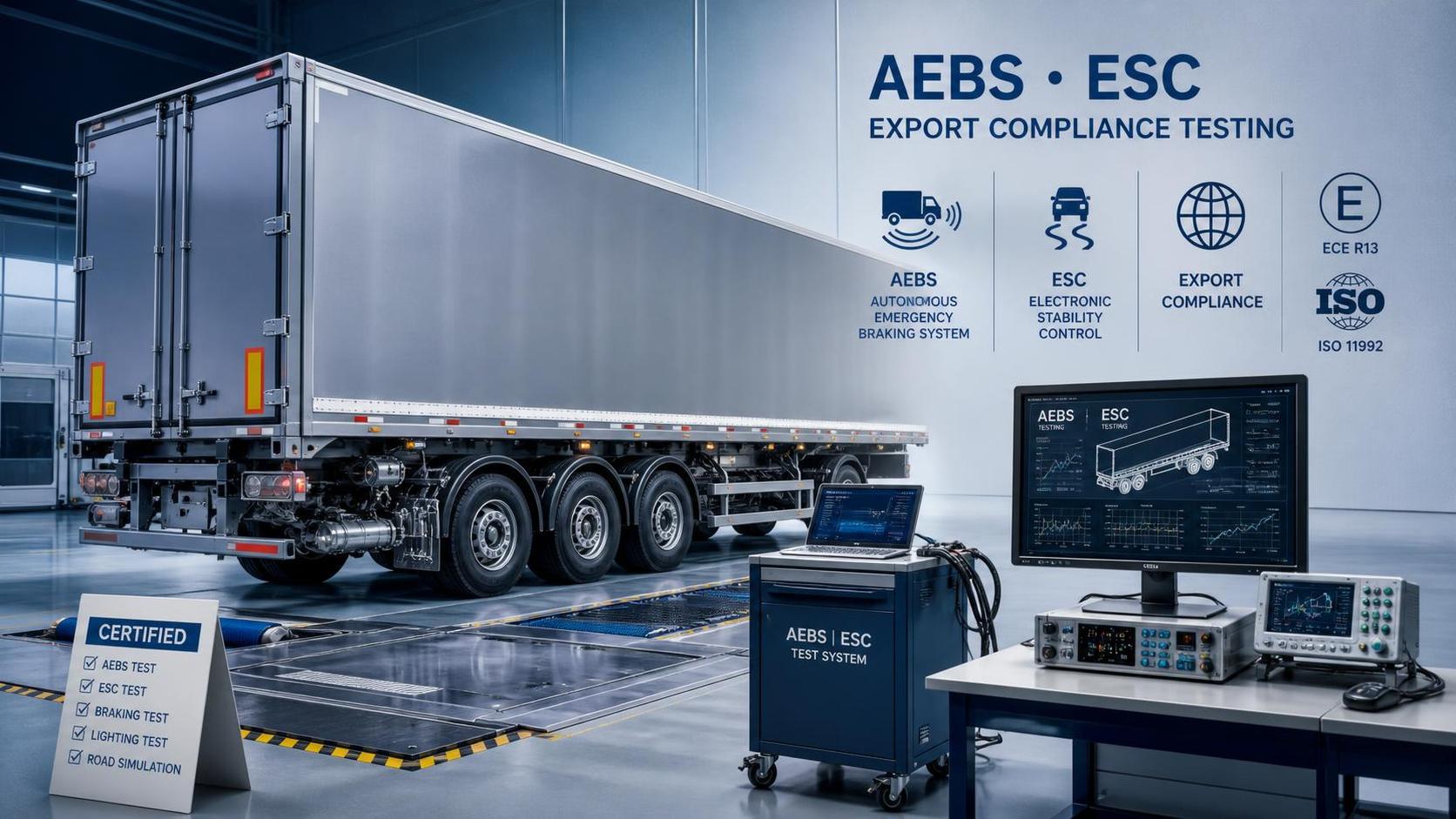
On August 8, 2026, the U.S. Department of Transportation put into force a revision to FMVSS No. 136/137 that changes the compliance baseline for new imported semitrailers. Under the new requirement, vehicles entering the U.S. market must be equipped with automatic emergency braking systems (AEBS) and electronic stability control (ESC), and they must also complete type certification through laboratories designated by NHTSA. For Chinese suppliers and other export-facing participants in the semitrailer trade, this is not just a technical specification update; it directly affects customs clearance, delivery timing, and the ability of newly imported vehicles to enter the market.
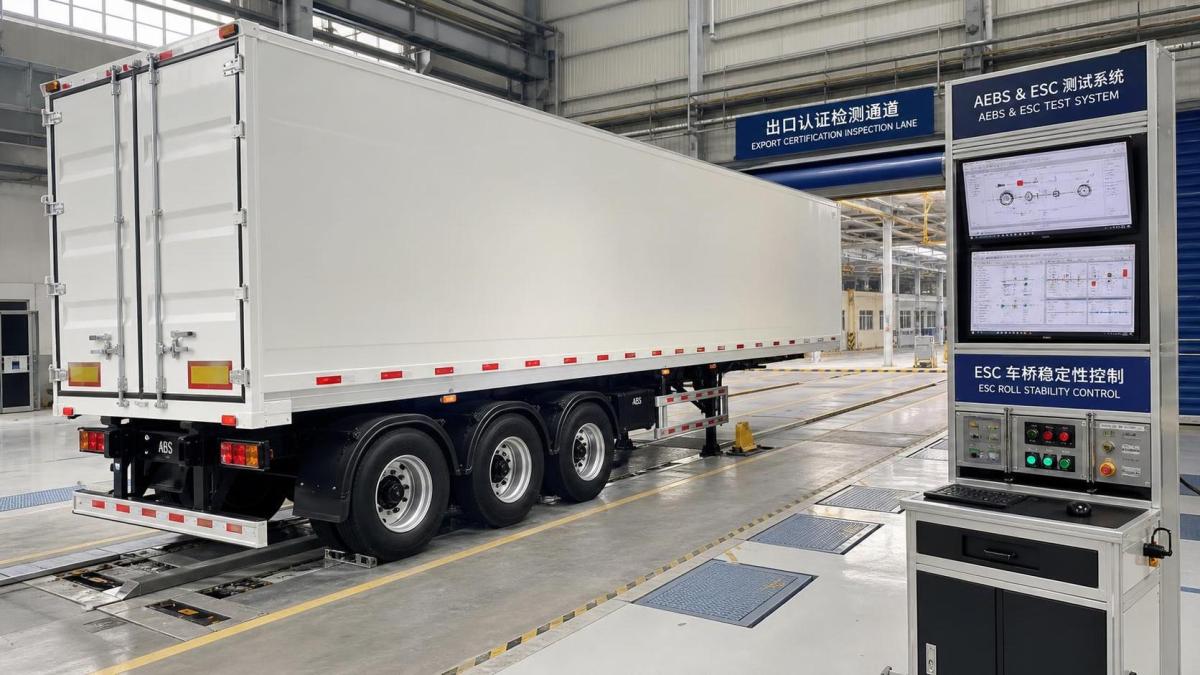
What the Rule Now Requires
The confirmed facts are clear. The U.S. DOT formally implemented the FMVSS No. 136/137 revision on August 8, 2026. The rule requires all newly imported semitrailers to be fitted with AEBS and ESC. It also requires those vehicles to pass type certification through laboratories designated by NHTSA. According to the event summary provided, semitrailers that do not obtain the required certification will be refused entry into the United States.
Where the Immediate Pressure Falls
Export shipments now face a stricter entry gate
Export-oriented vehicle suppliers are likely to feel the impact first because the rule is tied directly to market access. The main pressure point is no longer limited to product configuration; it extends to whether the vehicle can complete the required certification path before shipment and entry. What deserves closer attention is the link between technical readiness, certification status, and customs clearance timing.
Manufacturing and specification alignment become more sensitive
For manufacturers, the requirement affects both product specification management and delivery coordination. If AEBS and ESC are now mandatory for new imported semitrailers, then production planning for U.S.-bound units must reflect that requirement from the outset. From an industry perspective, the practical issue is whether export models, technical documents, and factory release arrangements are aligned with the new certification condition rather than treated as a later-stage paperwork matter.
Testing and certification-related service providers gain a larger operational role
The rule also increases the importance of testing and certification support functions. Because type certification must be completed through NHTSA-designated laboratories, the compliance chain now depends more heavily on laboratory access, document preparation, and coordination around formal certification procedures. Observably, this creates a more time-sensitive interface between exporters, technical teams, and compliance service providers.
Buyers and delivery coordinators need to watch contract execution risk
Purchasers, import-side coordinators, and supply chain service firms may also be affected because the rule can alter delivery sequencing and acceptance conditions. Where contracts or procurement plans involve new imported semitrailers, counterparties may need to pay closer attention to certification status, technical file completeness, and delivery eligibility. The immediate business issue is not abstract regulation exposure, but whether a scheduled shipment can still move through the trade and handover process as planned.
What Companies Should Check Now
Review certification readiness before shipment decisions
Companies involved in exports to the U.S. should first verify whether products intended for that market are already positioned to meet the AEBS and ESC requirement and the related type certification condition. Analysis shows that shipment timing and certification timing now need to be treated as connected decisions, especially where customs entry depends on formal compliance status.
Recheck technical files and trade documents
Another practical focus is documentation. Businesses should pay attention to whether technical descriptions, testing materials, certification files, and trade documents consistently reflect the required vehicle configuration and compliance path. Since the provided information does not include detailed implementation procedures, it is more appropriate to understand this as a document-control and compliance-verification issue that still requires careful follow-up.
Adjust procurement and delivery planning with less margin for delay
For firms managing production slots, purchasing schedules, or outbound delivery plans, the effective date matters because the rule is already in force. What deserves closer attention is whether procurement commitments, delivery promises, and export arrangements were made under assumptions that no longer match the current U.S. entry requirement. This is especially relevant where project timing depends on uninterrupted customs clearance.
Track later official wording and market-side implementation
Because the input does not provide additional enforcement detail beyond the mandatory requirement and entry consequence, companies should continue monitoring how the rule is described and applied in later official communications, certification practice, and market-facing documentation. That includes any changes in compliance wording used in tenders, purchase specifications, or transaction reviews.
Why This Looks Like an Execution Signal
From an industry perspective, this development is better understood as a rule that has already moved from policy language into market execution. The effective date is explicit, the equipment requirement is explicit, and the certification consequence for non-compliant vehicles is explicit. At the same time, Analysis shows that the market still needs to watch how certification workflows, document expectations, and transaction-level checks develop in practice. In that sense, this is both a landed compliance change and an ongoing execution signal.
How to Read the Change at This Stage
The most grounded reading is that the U.S. entry threshold for new imported semitrailers has become more demanding in both hardware and certification terms. For exporters, manufacturers, buyers, and compliance-linked service providers, the issue is no longer whether the requirement may emerge, but how quickly operations, files, and delivery planning can match it. It is more appropriate to understand this event as a live compliance condition with immediate trade implications, while still keeping later implementation details under observation.
Basis of This Article and What Still Needs Verification
This article is based on the user-provided news title, event date, and event summary. For developments of this kind, relevant source categories typically include official regulatory notices, releases from supervisory authorities, customs or trade administration information, industry association updates, standards documentation, and reporting by authoritative media. A specific official source link was not provided in the input, so that point still requires continued verification. Observably, the areas that merit further tracking include detailed policy wording, certification implementation practice, possible changes in tender and procurement documents, industry feedback, and how companies execute against the new requirement in actual trade and delivery scenarios.
By clicking 'Allow All', you agree to the storage of cookies on your device to enhance site navigation, analyze site usage and assist with our marketing efforts. Coo Cookie Notice
Leave a message and we'll get back to you soon.