



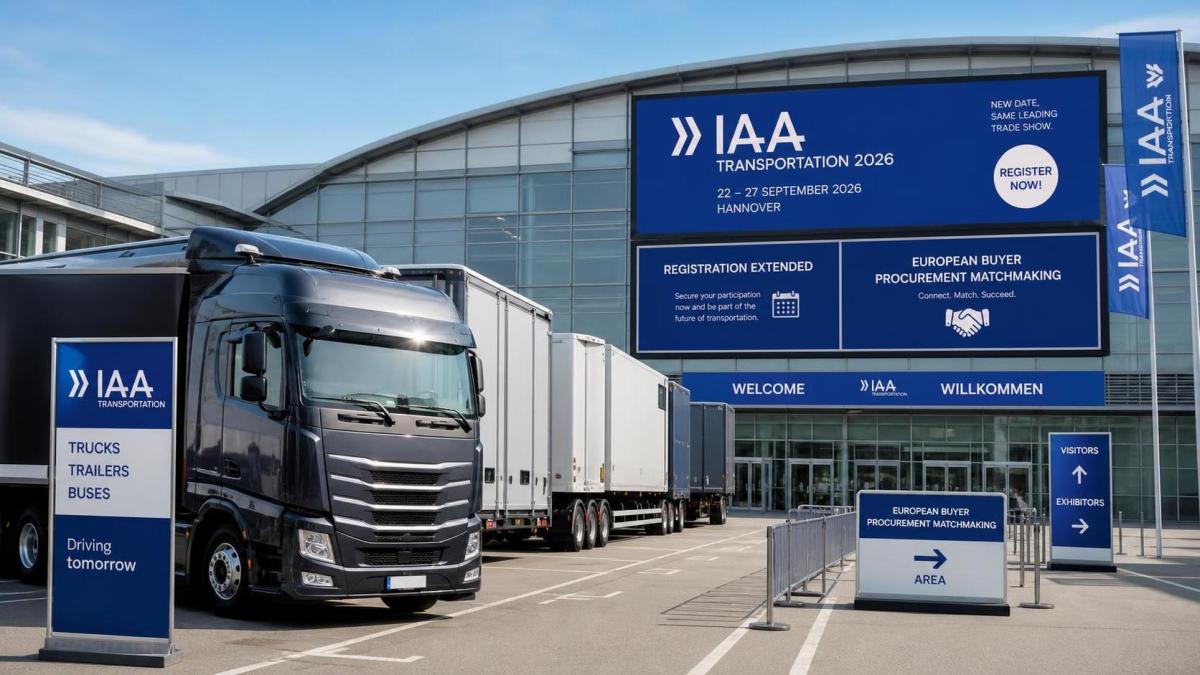
On August 9, 2026, IAA Transportation 2026 announced two adjustments that matter beyond event logistics: the registration deadline for Chinese and Southeast Asian semi-trailer manufacturers was extended from August 5 to August 15, and a new Trailer Procurement Hub was introduced for European importers and distributors. With the show scheduled for September 16-21 in Hanover, this update deserves attention from trailer manufacturers, overseas buyers, channel partners, and supply chain service providers because it affects how supplier screening, compliance preparation, and pre-show procurement planning may now be sequenced.
What the organizer has formally changed
According to the event update, the deadline extension applies to Chinese and Southeast Asian semi-trailer manufacturers that plan to register for IAA Transportation 2026. The official reason given is the longer logistics and certification preparation cycle facing Asian suppliers. The revised deadline moves the cutoff from August 5 to August 15.
The organizer also introduced the Trailer Procurement Hub for the first time. This channel is open to European importers and distributors through a pre-matching system. The system supports one-click filtering for models compliant with ECE R13-H and allows factory audit appointments to be arranged in advance.
The event itself is scheduled to take place in Hanover from September 16 to September 21, 2026. The announced adjustment directly affects the procurement rhythm of overseas buyers and the front-loaded planning of related supply chains.
Where the impact is likely to be felt first
Supplier onboarding may shift for cross-border trailer trade
From an industry perspective, the most immediate impact is on suppliers that were close to missing the earlier registration window. The extra ten days may matter less as a simple extension and more as a short operational buffer for documentation, logistics coordination, and certification readiness. For export-oriented manufacturers, the practical issue is whether the added time can be converted into a more complete market-facing presentation rather than a rushed presence.
European buyers gain a more structured screening path
For importers and distributors, the new procurement hub changes the pre-show workflow. Instead of treating the exhibition mainly as an on-site discovery channel, buyers can begin narrowing options through compliance-based filtering and factory audit scheduling before the event opens. What deserves closer attention is that this may pull part of the sourcing decision process forward, especially where ECE R13-H screening is a threshold requirement.
Channel and service partners may need earlier coordination
Service providers involved in supplier qualification, documentation support, inspection planning, and trade coordination may also feel the effect. Analysis shows that once pre-matching and audit booking become part of the exhibition process, the pace of coordination can move earlier than a typical trade fair cycle. The immediate concern is not just attendance, but whether counterparties can respond quickly enough to buyer requests generated through the new system.
What companies should watch now
Watch for any further clarification on access rules
Companies should pay attention to whether the organizer issues additional wording on eligibility, registration materials, matching procedures, or appointment rules tied to the Trailer Procurement Hub. The current update confirms the mechanism, but actual business use will depend on how detailed the operating rules become.
Prepare compliance-linked model information carefully
Because the new system highlights one-click filtering for ECE R13-H compliant models, manufacturers and intermediaries should treat compliance presentation as a front-end business issue rather than a back-end technical note. In practical terms, model information, supporting documents, and communication materials should be aligned so that buyers can screen efficiently.
Adjust buyer communication and meeting schedules
For overseas sales teams and channel partners, the deadline extension should not be read simply as more time. It is more appropriate to understand this as a compressed opportunity to reorganize outreach, confirm which models are ready for matching, and secure audit or meeting slots before schedules tighten closer to the exhibition dates.
Recheck supply chain readiness behind the registration step
Observably, the stated reason for the extension points to logistics and certification preparation cycles. That means suppliers should look beyond the registration task itself and recheck whether internal readiness, supporting paperwork, and cross-border coordination are consistent with the claims they plan to present to buyers.
Why this looks like more than a deadline adjustment
Analysis shows that the extension and the new procurement channel should be read together rather than separately. The deadline change suggests that supplier-side preparation timelines remain a live issue. The procurement hub, by contrast, signals an attempt to make buyer-supplier matching more structured around compliance and verification. Taken together, this is less about exhibition administration alone and more about how sourcing interactions are being organized earlier in the process.
At the same time, it would be premature to describe this as a settled change in market practice. The current information confirms a new mechanism and a revised deadline, but its practical influence will depend on actual participation, how actively buyers use the pre-matching function, and whether audit scheduling translates into concrete procurement follow-up.
How this update is best understood for now
At this stage, this development is best understood as a near-term operational change with broader strategic implications worth monitoring. In the short term, it alters registration timing and may reshape pre-show preparation for semi-trailer suppliers and European buyers. In a broader sense, it points to growing attention on compliance-based screening and earlier procurement coordination. The market should treat it as a meaningful signal, but not yet as a fully established shift without further evidence from execution during the 2026 exhibition cycle.
Basis of this article and points still to verify
This article is based on the user-provided news title, event date, and event summary concerning IAA Transportation 2026, the registration deadline extension to August 15, and the launch of the Trailer Procurement Hub. For this type of industry update, commonly relevant source categories may include official event announcements, company notices, industry association information, authoritative media coverage, and standard-related reference documents.
A specific official source link was not provided in the input, so the exact wording and any later procedural updates still require ongoing verification. Follow-up attention should focus on whether the organizer releases more detailed rules for registration, pre-matching, compliance filtering, and factory audit booking, as these details will determine how much operational impact the announced changes ultimately have.
By clicking 'Allow All', you agree to the storage of cookies on your device to enhance site navigation, analyze site usage and assist with our marketing efforts. Coo Cookie Notice
Leave a message and we'll get back to you soon.