


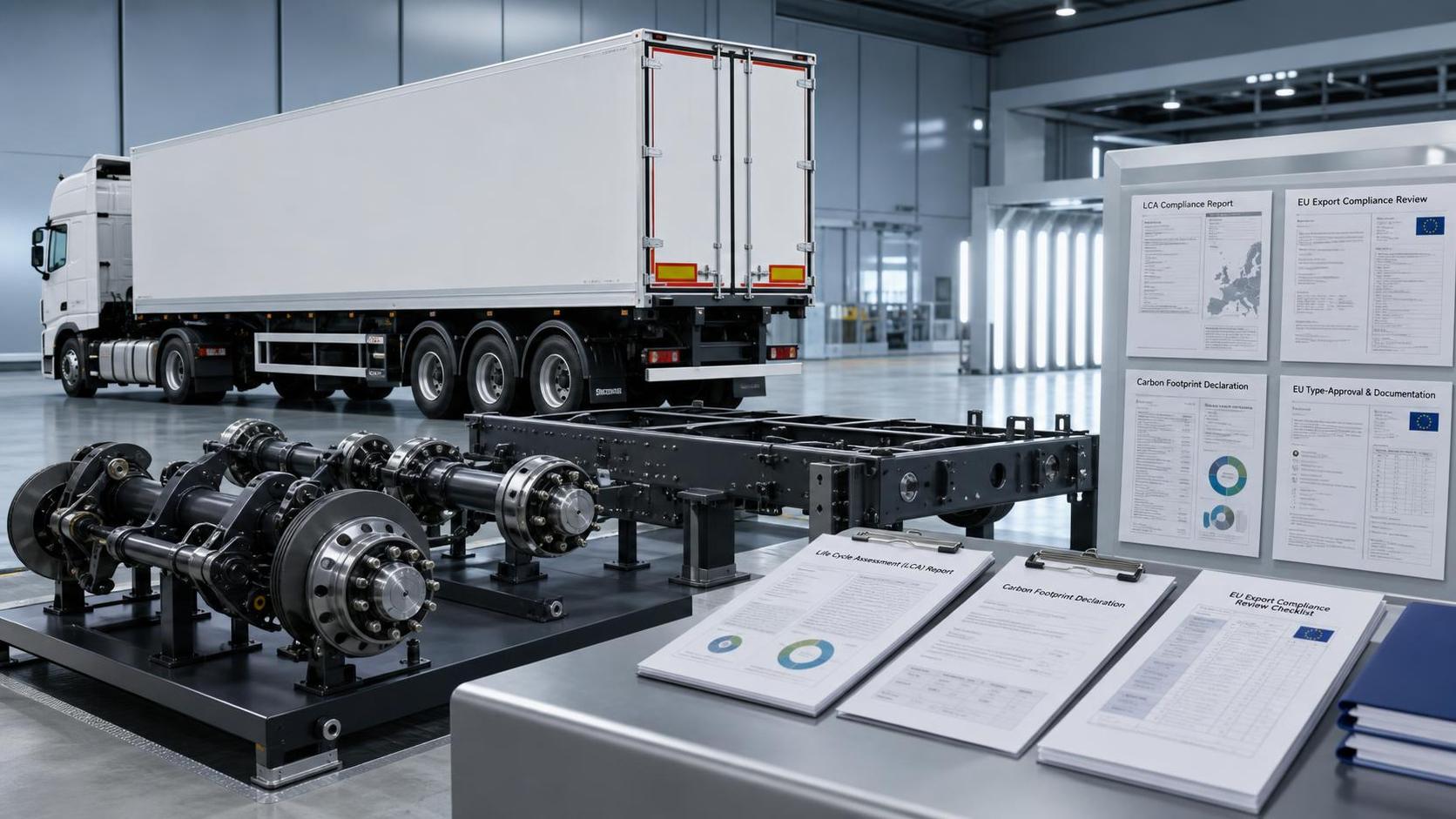
On October 1, 2026, the latest compliance change affecting heavy commercial vehicle exports to the EU moved into practical focus: semitrailers, tractor units, and key assemblies entering the EU market are now tied to a verified life cycle assessment filing requirement under a new European Commission implementation guide. For exporters, component suppliers, certification service providers, and procurement teams, the issue is not only the carbon accounting method itself, but also how this new requirement may reshape type-approval preparation, third-party verification arrangements, documentation readiness, and delivery timing.
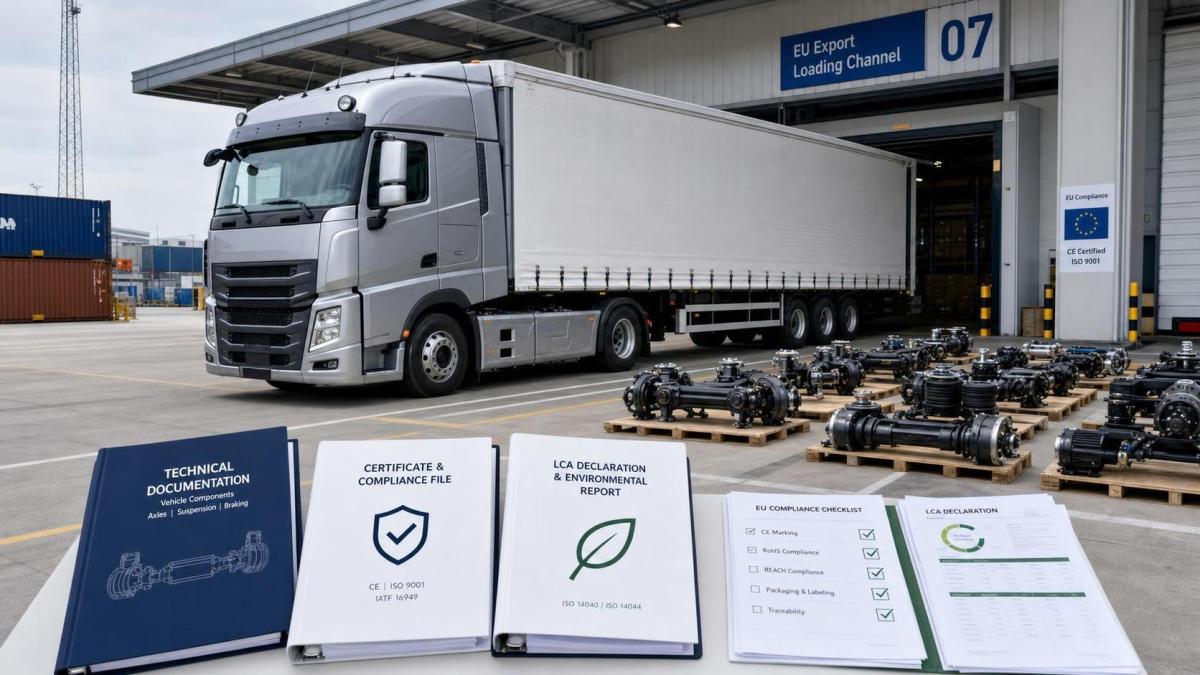
What the new filing requirement formally covers
The European Commission issued the Heavy Commercial Vehicle Full Life-Cycle Carbon Footprint Certification Implementation Guide (EU/2026/117) on August 1, 2026. According to the information provided, from October 1, 2026, all semitrailers and tractor units entering the EU market, as well as key assemblies including axles, suspension systems, and braking systems, must be accompanied by an LCA report verified by a recognized body.
The same input states that the carbon accounting work must comply with Appendix E of EN 15804+A2:2023. The reported change is described as directly affecting the type-approval path, third-party testing costs, and delivery schedules of Chinese semitrailer export companies.
Where the pressure is likely to appear in the supply chain
Export programs may face a new document gate
For companies exporting complete vehicles to the EU, the immediate impact is likely to fall on pre-shipment and approval-related workflows. Analysis shows that once an accredited verification step becomes a condition tied to market entry, LCA documentation is no longer a supporting sustainability file in the background; it becomes part of the practical export package that can affect whether a shipment is ready for submission and release within the planned timetable.
Component suppliers may be pulled into the compliance chain earlier
Suppliers of axles, suspension systems, and braking systems are explicitly connected to the scope described in the input. From an industry perspective, this means upstream technical and materials information may need to be prepared in a form that supports downstream LCA verification. What deserves closer attention is whether buyers begin requesting more standardized product data, carbon-accounting inputs, and supporting technical records earlier in the sourcing cycle.
Testing and certification service providers may see a narrower execution window
The requirement for verification by a recognized body points to greater operational pressure on certification and testing-related service links. Observably, the issue is not only cost, which is already flagged in the input, but also scheduling. If verification demand rises close to shipment deadlines or approval milestones, service capacity and document turnaround could become practical constraints for exporters and their suppliers.
Procurement and delivery coordination may become more document-sensitive
For procurement teams, distributors, and supply-chain coordinators involved in EU-bound vehicle programs, the change may shift attention toward whether suppliers can provide compliant LCA materials in time. Analysis shows that delivery planning may increasingly depend on the readiness of verified carbon-footprint documentation, not just manufacturing completion or conventional quality files.
What companies should review now
Check whether current approval files are still sufficient
Companies with EU-directed semitrailer or tractor unit business should review whether their existing type-approval preparation and export compliance files already cover the newly required LCA element. The practical question is whether internal document sets, supplier submissions, and external verification arrangements can support the requirement from the October 2026 effective point.
Trace the documentation needs of key assemblies
Because axles, suspension systems, and braking systems are named in the provided summary, businesses should pay close attention to how technical records for these assemblies are collected and retained. Analysis shows that weak traceability at the component level could affect the completeness and efficiency of the final LCA submission package.
Revisit lead times with external verification in mind
The input already identifies third-party testing cost and delivery cycle effects as direct consequences. It is more appropriate to understand this as a planning issue that deserves immediate review: companies may need to reassess quotation validity periods, booking sequences, and shipment timing assumptions where accredited LCA verification is now a required step.
Watch for changes in tender and buyer document requests
Even where the formal rule is already identified, execution in the market often appears first through document checklists, procurement terms, and technical submission requirements. Observably, exporters and suppliers should monitor whether customers, distributors, or project owners begin adjusting bid documents and purchasing specifications to reflect the LCA reporting requirement and the EN 15804+A2:2023 Appendix E accounting basis.
How this development is best understood at this stage
Analysis shows that this is more than a policy signal and less than a fully closed operational picture. The requirement itself, the effective date, the covered product scope, and the reference standard basis are already clear in the provided information. At the same time, the market still needs to observe how verification expectations, document review practice, and commercial implementation are applied in day-to-day transactions.
From an industry perspective, the development is best read as an implemented compliance change with immediate execution significance for affected exports, while some practical interpretation points may still require continued observation through certification practice, procurement behavior, and rule application in actual market access processes.
What this means for near-term market execution
The immediate significance of this update is that carbon-footprint reporting has moved closer to the operational core of EU-bound heavy commercial vehicle trade, particularly for semitrailers and named key assemblies. The change should not be overstated beyond the facts provided, but it should also not be treated as a distant sustainability reference. It is more appropriate to understand this as a concrete compliance threshold that may influence approval preparation, supplier coordination, external verification scheduling, and delivery control.
Basis of this article and points that still need checking
This article is generated from the user-provided news title, event date, and event summary. For developments of this kind, source categories typically relevant to later verification include official announcements, publications by regulatory authorities, customs or trade administration information, industry association releases, standards documentation, and reporting by authoritative trade media.
No specific official source link was provided in the input, so the exact official link still needs to be verified on an ongoing basis. Further observation is also needed on detailed implementation language, certification practice, review criteria, tender document updates, market feedback, and how affected companies execute the requirement in export operations.
By clicking 'Allow All', you agree to the storage of cookies on your device to enhance site navigation, analyze site usage and assist with our marketing efforts. Coo Cookie Notice
Leave a message and we'll get back to you soon.