


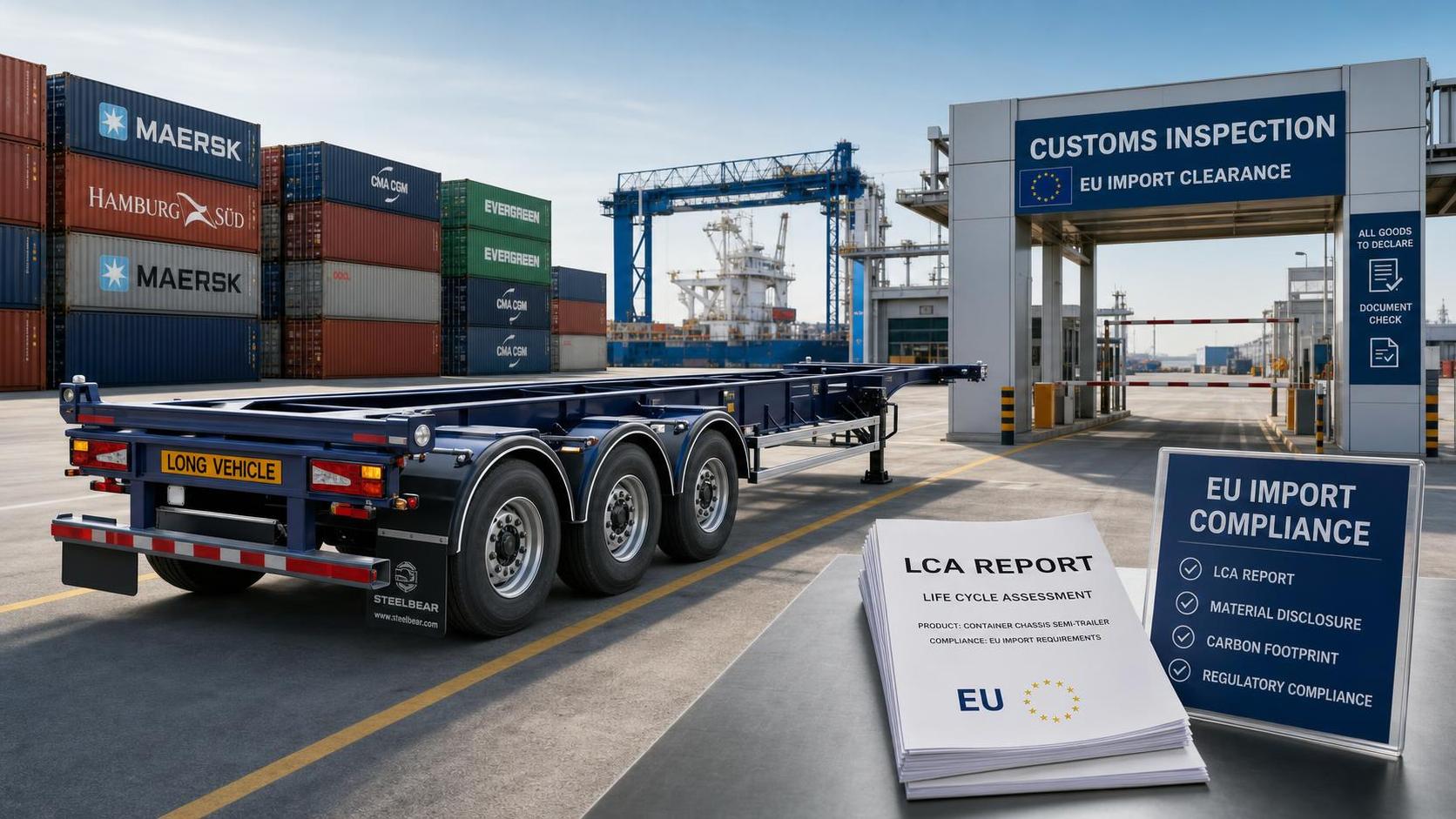
From August 15, 2026, semitrailer imports entering through EU member state ports face a stricter compliance gate before customs clearance. Based on the European Commission’s emergency implementing notice dated August 2, 2026, importers must submit a lifecycle assessment (LCA) report issued by an EU-ELCD-certified body before declaration, making this a practical issue for exporters, overseas importers, customs-facing teams, and distribution planners because it directly affects clearance timing, landed cost, and shipment scheduling.
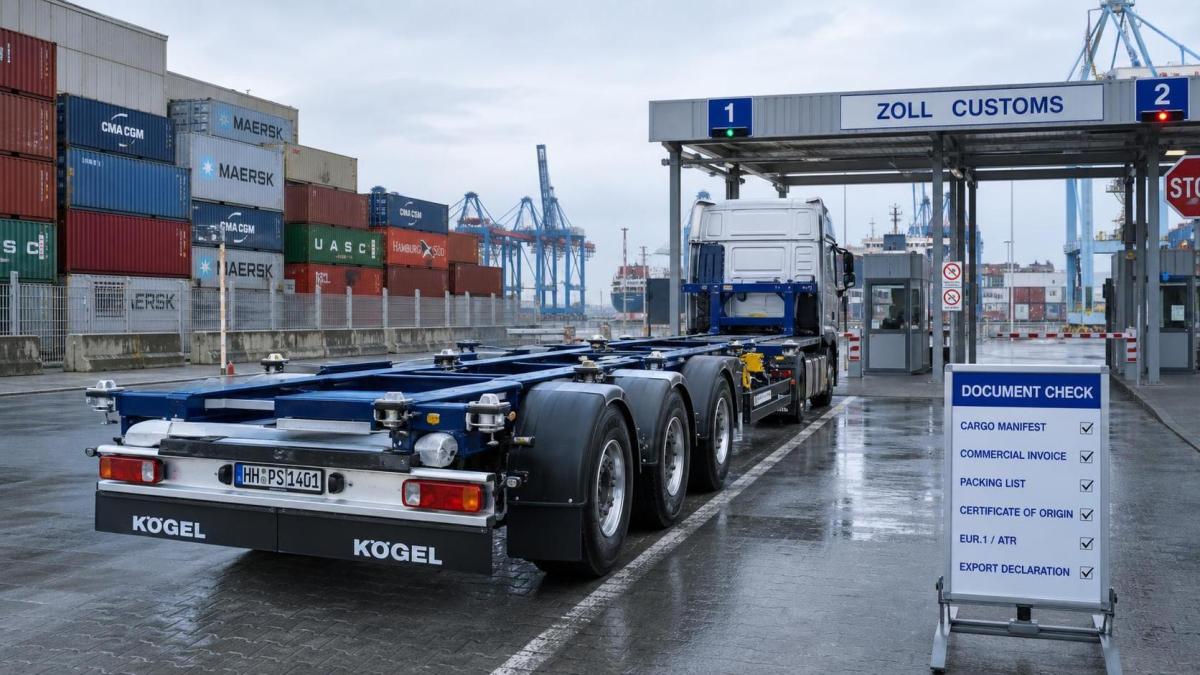
What the new entry requirement confirms
The confirmed facts are limited but commercially significant. The European Commission issued an emergency implementing notice on August 2, 2026, referenced as EU/2026/789. Under that notice, from August 15, 2026, all semitrailers entering through ports in EU member states, including products exported from China, must have an LCA report submitted before customs declaration.
The notice further states that if the report is not submitted, or if the report does not meet the compliance requirement, the cargo will be held at port. In addition, a 30% supplementary compliance deposit may be imposed. The summary provided also confirms that the measure directly affects customs clearance efficiency, procurement cost, and distribution planning for overseas importers.
Where the pressure is likely to appear first
Importers and customs-facing trading operations
From an industry perspective, importers are the first group likely to feel the operational impact because the LCA report becomes a pre-declaration document rather than a later-stage compliance formality. The main exposure is in customs timing, document readiness, and cash planning, especially where shipments are already scheduled around narrow delivery windows.
Export manufacturers serving the EU market
Analysis shows that manufacturers exporting semitrailers to the EU may face pressure upstream even though the immediate checkpoint sits at the port of entry. Their commercial exposure is tied to whether product documentation can support the importer’s pre-clearance process, and whether shipment commitments remain realistic once LCA issuance becomes a prerequisite.
Distributors and channel-side inventory planners
Observably, distributors and regional channel operators may be affected through disruption to receiving schedules rather than through regulation directly. If cargo is held for missing or non-compliant reports, the business effect can move quickly into replenishment timing, delivery sequencing, and coordination with downstream customers.
Supply chain service providers
Freight, port, and compliance support teams are also part of the impact path because this measure changes the document threshold before goods can move through clearance. What deserves closer attention is whether existing shipment workflows already account for LCA verification early enough to avoid delays accumulating at the port stage.
Practical points companies should track now
Whether documentation is ready before declaration
The immediate operational issue is not only whether an LCA report exists, but whether it is issued by an EU-ELCD-certified body and available before customs declaration. For companies with near-term shipments, document timing becomes as important as document content.
How non-compliance changes cost exposure
The stated consequence is not limited to delay. A held shipment and a 30% supplementary compliance deposit create direct commercial pressure on import budgeting, payment planning, and landed-cost assumptions. Companies involved in pricing, procurement, and delivery commitments should read this as a near-term execution issue.
The difference between policy wording and workflow execution
Analysis shows that one of the main business risks lies in treating the notice as a general compliance update instead of a customs workflow requirement. The measure matters at the point where goods are declared, so internal coordination between suppliers, importers, and customs-facing teams becomes more important than broad policy awareness alone.
What to monitor in customer and supplier communication
Businesses handling EU-bound semitrailer trade should pay close attention to contract timing, shipment readiness, and counterpart communication around required documents. Where delivery schedules are already committed, the practical question is whether all parties are aligned on the LCA requirement before cargo reaches an EU port.
Why this reads as more than a routine document update
This section is analysis. It is more appropriate to understand this as an immediate compliance change with short-term operational consequences, rather than as a distant policy signal. The reason is straightforward: the notice sets a specific effective date, ties the requirement directly to pre-clearance, and defines concrete consequences for missing or non-compliant documentation.
At the same time, it should not yet be overstated as a fully settled long-term market outcome based on the limited input available here. Observably, the stronger conclusion at this stage is that the rule has immediate execution value for trade flows, while its broader structural effect on sourcing, pricing, or competitive positioning still requires continued observation.
How the industry may best read this development
The core significance of this update is that LCA documentation is no longer a peripheral sustainability issue within this specific import scenario; it is now positioned as a customs access condition for semitrailers entering through EU member state ports. For market participants, the most balanced reading is that this is a live compliance requirement with direct effects on clearance speed and transaction cost, while its longer-term commercial implications should be assessed carefully as implementation develops.
Basis of this article and points that still need verification
This article is based on the user-provided news title, event date, and event summary concerning the European Commission emergency implementing notice Ref: EU/2026/789 and its August 15, 2026 effective date for semitrailer imports. For this type of industry update, the relevant source categories typically include official government or regulatory notices, company disclosures, industry association communications, authoritative media reporting, and standards-related documentation.
No specific official source link was provided in the input, so the exact publication channel and any later clarifications still require continued verification. What deserves closer attention going forward is whether there are further official explanations on document interpretation, enforcement practice, or any implementation-related adjustments affecting customs handling.
By clicking 'Allow All', you agree to the storage of cookies on your device to enhance site navigation, analyze site usage and assist with our marketing efforts. Coo Cookie Notice
Leave a message and we'll get back to you soon.