

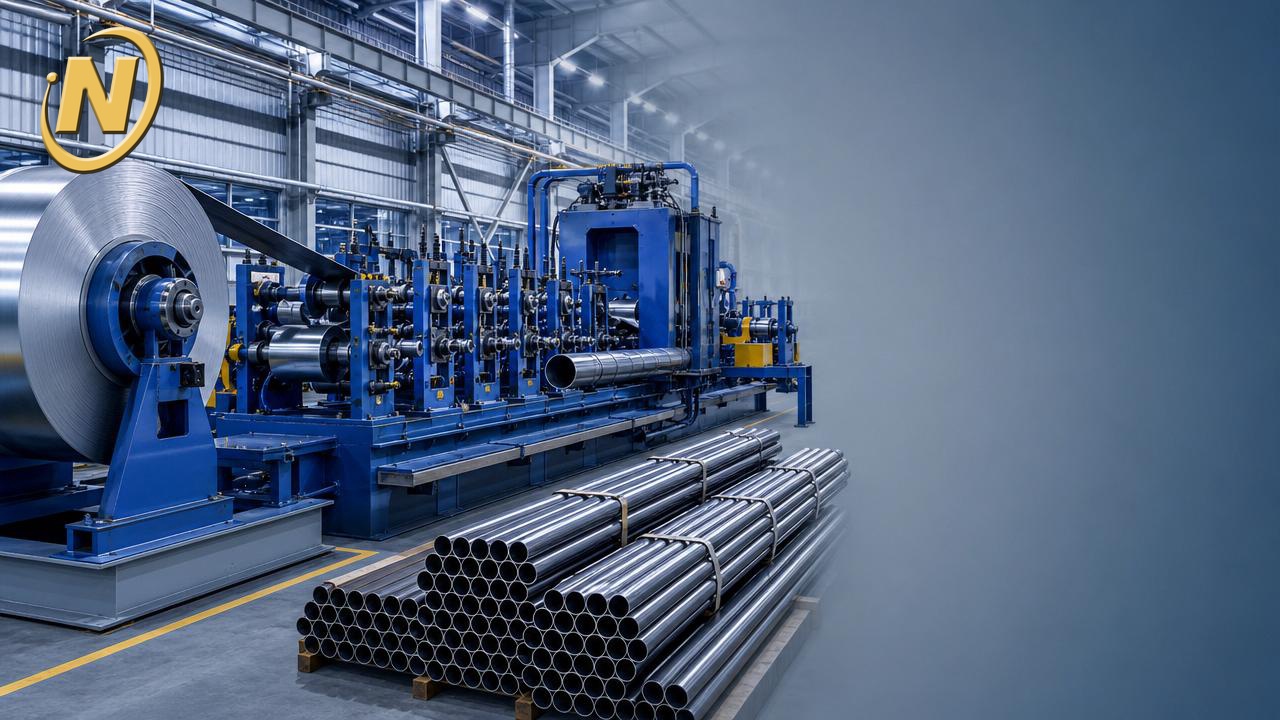
For procurement teams, understanding the welded steel pipe manufacturing process is essential to evaluating quality, cost, and supplier reliability. From raw material selection to forming, welding, sizing, and inspection, each step directly affects product performance and delivery consistency. This guide highlights the key factors buyers should review before placing orders, helping you make more informed purchasing decisions and reduce sourcing risks.
Why should buyers study the welded steel pipe manufacturing process before placing orders?
Many purchasing problems begin long before delivery. They start when a buyer compares prices without understanding how the welded steel pipe manufacturing process affects wall thickness control, weld integrity, dimensional tolerance, and coating suitability.
A lower quote may reflect thinner strip input, weaker inspection routines, slower mill stability, or limited testing capability. For procurement teams, that can turn into claims, delayed projects, or inconsistent performance at the jobsite.
This is especially important in the steel and section industry, where buyers often balance tight budgets, mixed specification demands, and strict delivery windows. Understanding the process helps you judge whether a supplier can truly match the stated standard.
- It improves supplier evaluation by linking production capability to the final pipe requirements.
- It reduces sourcing risk by revealing hidden quality differences behind similar quotations.
- It supports negotiation on tolerances, testing scope, packaging, and delivery priorities.
- It helps buyers separate suitable mills for structural, fluid, mechanical, and low-pressure applications.
What the process tells you about supplier reliability
A capable pipe mill does more than shape steel. It controls incoming coil quality, monitors forming stability, manages welding parameters, verifies sizing accuracy, and records inspection results. Each control point reflects management discipline, not just machine ownership.
What are the main steps in the welded steel pipe manufacturing process?
For buyers, the welded steel pipe manufacturing process can be reviewed as a chain of linked operations. If one stage is weak, later corrections are limited and often expensive.
- Raw material selection: Steel coil or strip is chosen according to grade, thickness, width, surface condition, and end-use standard.
- Uncoiling and slitting: The coil is opened and cut into required strip widths when necessary for the target pipe size.
- Forming: Roll sets progressively bend the strip into a round, square, or rectangular profile before welding.
- Welding: The open seam is joined, commonly by high-frequency electric resistance welding for many commercial pipe products.
- Bead treatment: Internal and external weld beads may be trimmed depending on specification and application.
- Sizing and straightening: The pipe is calibrated to target outside diameter, wall consistency, and straightness.
- Cutting and finishing: Pipes are cut to length, end-finished, marked, bundled, and prepared for further coating or galvanizing if required.
- Inspection and testing: Dimensional checks, weld examination, mechanical tests, and surface review confirm conformity.
Which steps have the greatest impact on quality?
Three stages usually deserve the closest buyer attention: raw material control, welding stability, and final inspection. These directly influence strength, leak resistance, consistency between batches, and acceptance rates during incoming inspection.
Which production details should procurement teams verify with suppliers?
Buyers should ask process-based questions instead of only requesting a quotation sheet. That approach gives a clearer picture of whether the supplier can deliver repeatable quality across multiple orders.
The table below summarizes practical checkpoints procurement teams can use when reviewing the welded steel pipe manufacturing process during RFQ comparison and supplier qualification.
This review method helps buyers compare mills beyond price. A supplier that answers these questions clearly is usually easier to work with during technical clarification, order tracking, and claim resolution.
Useful documents to request
- Material test reports for the input coil or strip.
- Dimensional inspection records for outside diameter, wall thickness, and length.
- Details of hydrostatic, NDT, or weld-related inspection where relevant.
- Packing, marking, and bundle specifications for warehouse and project handling.
How do ERW and other welded pipe routes affect purchasing decisions?
Not all welded pipes are produced the same way. The welded steel pipe manufacturing process varies by product purpose, size range, and standard. Buyers should understand which route matches their use case instead of assuming all welded pipe offers equal performance.
The comparison below helps procurement teams review common welded pipe options from a sourcing and application perspective.
For many general procurement projects, ERW pipe remains a practical choice because it balances cost, availability, and production efficiency. Still, the right route depends on pressure conditions, fabrication needs, corrosion exposure, and acceptance criteria.
When a low-cost option may not be the right option
If the project requires tight fit-up, secondary bending, visible surface quality, or post-fabrication galvanizing, the cheapest pipe can create extra downstream cost. Scrap, labor delays, and rejection can quickly exceed the initial savings.
What quality risks are commonly overlooked in the welded steel pipe manufacturing process?
Raw material inconsistency
Different coil thickness tolerances, chemistry ranges, or surface defects can cause unstable forming and weld variation. Buyers should check whether the mill screens input material before production instead of relying only on supplier declarations.
Weld seam concerns
The weld area is the most sensitive zone in many pipe applications. Poor heat input, edge mismatch, or incomplete bead control may reduce performance, especially where the pipe will be cut, bent, threaded, or pressure-tested later.
Dimensional variation across batches
A sample may pass while later batches drift in length, straightness, wall thickness, or corner geometry. Procurement teams should verify whether the supplier maintains in-line checks and final lot inspection for every order, not just first articles.
Surface and coating issues
Surface scratches, oil residue, rust staining, and poor coating adhesion can affect appearance and later finishing. This matters in construction, shelving, mechanical fabrication, and export shipments exposed to longer storage cycles.
- Confirm whether pipes are supplied black, oiled, galvanized, painted, or prepared for secondary treatment.
- Ask how bundles are protected against moisture during inland and sea transportation.
- Check whether end protection, strap quality, and identification marks match warehouse handling needs.
Which standards, tests, and certifications should buyers discuss?
The welded steel pipe manufacturing process should always be reviewed together with the target standard. Buyers should not assume that all mills interpret requirements in the same way. Standard name, grade, tolerance scope, and testing level all need confirmation.
The table below outlines common compliance topics buyers often review when sourcing welded steel pipe for structural or industrial use.
Common international references may include ASTM, EN, BS, JIS, or other project-specified standards. The key is not the label alone, but whether the supplier can explain how production and testing align with the required document set.
How can buyers balance cost, lead time, and fit-for-purpose quality?
Price pressure is real, especially in competitive tenders. But in the welded steel pipe manufacturing process, the most economical purchase is often the one with the lowest total procurement risk, not simply the lowest unit price.
Cost factors that change quotations
- Steel grade and raw material thickness tolerance.
- Pipe size, especially wall thickness and non-standard dimensions.
- Testing scope, document package, and third-party inspection involvement.
- Surface finish such as black, galvanized, painted, or special packaging.
- Order quantity, production scheduling pressure, and destination logistics.
Practical sourcing strategy
If the application is general structural use, a standard ERW route with agreed tolerances may be fully adequate. If the pipe will be machined, pressure-tested, or exposed to corrosion, buyers should define tighter controls in the RFQ rather than dispute them after shipment.
It is often helpful to separate must-have items from negotiable items. For example, wall thickness tolerance and test documentation may be mandatory, while packaging style or bundle weight can remain flexible for cost optimization.
FAQ: what do procurement teams ask most often?
How do I evaluate a supplier if I cannot visit the mill?
Ask for recent inspection records, production photos or videos by order stage, sample marking details, and document templates for mill certificates. Also request clear answers about the welded steel pipe manufacturing process, not just general company introductions.
What should I focus on when comparing two similar quotations?
Check steel grade definition, actual thickness basis, tolerance commitment, test scope, coating condition, packing terms, and delivery schedule. Small wording differences in these areas often explain large differences in claim risk and usability.
Is welded pipe suitable for demanding applications?
It can be, provided the application, standard, and inspection level are correctly matched. Welded pipe is widely used in structural, fluid conveyance, mechanical, and fabrication sectors, but buyers must confirm that the process route fits the service conditions.
How much detail should be included in the purchase order?
More than many buyers expect. Include size, wall thickness, length, standard, grade, tolerance requirements, finish, testing, marking, packing, documentation, and delivery terms. A clear order reduces interpretation gaps inside the mill.
Why choose us for welded steel pipe sourcing support?
If you are reviewing the welded steel pipe manufacturing process for an upcoming order, we can help you turn technical uncertainty into a structured sourcing checklist. That is especially useful when your team must compare several suppliers under time pressure.
You can contact us to discuss key purchasing topics such as size and tolerance confirmation, product selection by application, delivery lead time, coating or finishing options, documentation requirements, sample support, and quotation alignment with your specification.
If your project includes mixed pipe sizes, recurring orders, or custom packaging needs, we can also help organize a clearer procurement plan before you commit. Early clarification usually saves more cost than late correction.
By clicking 'Allow All', you agree to the storage of cookies on your device to enhance site navigation, analyze site usage and assist with our marketing efforts. Coo Cookie Notice
Leave a message and we'll get back to you soon.