


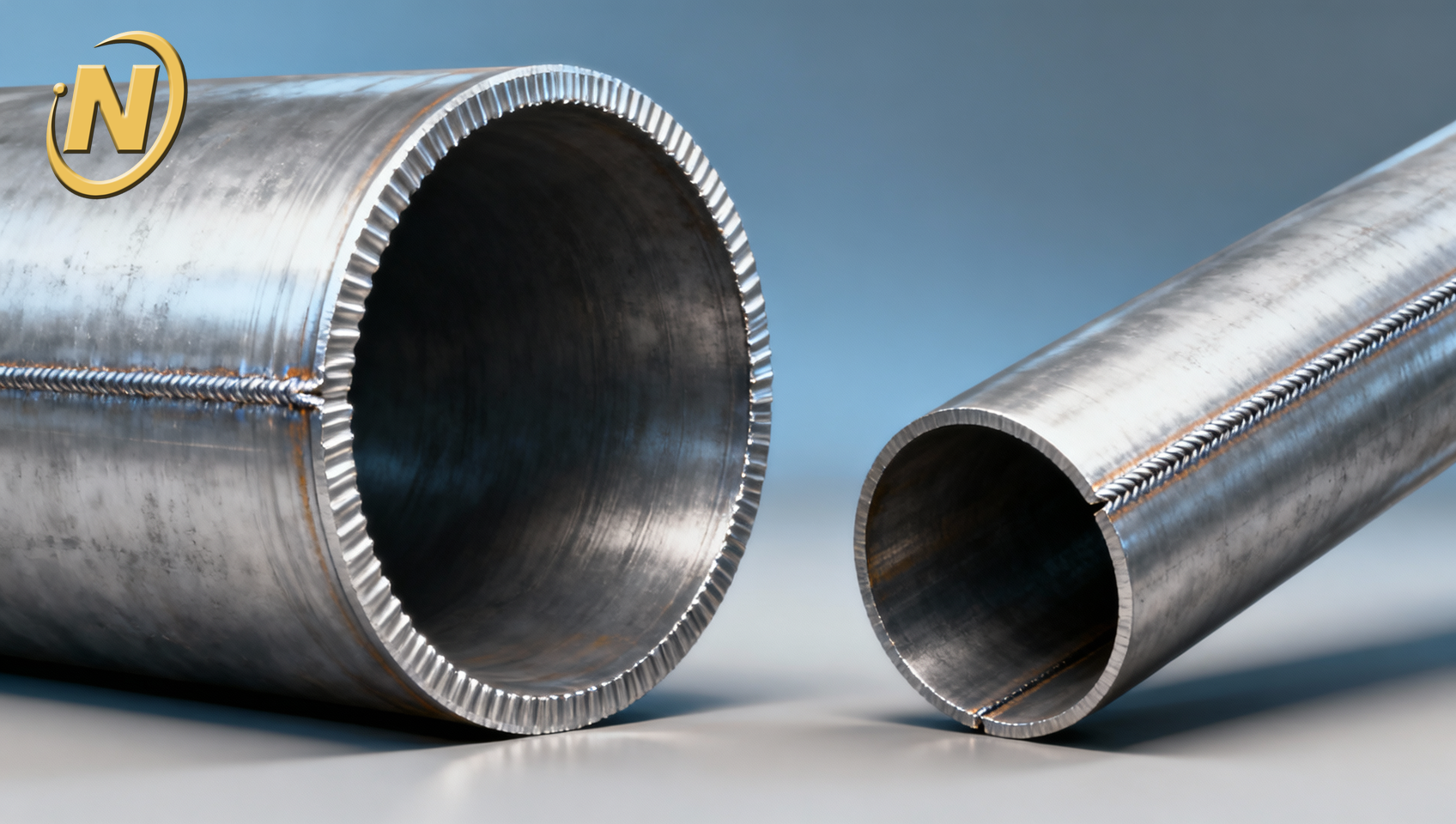
Welded steel pipe quality hinges critically on weld bead uniformity—a key indicator of structural integrity, pressure resistance, and long-term reliability. Yet inconsistency across standard production batches remains a persistent concern for engineers, procurement teams, and quality assurance professionals. This article investigates the real-world variability in weld bead appearance and geometry across commercially available welded steel pipe batches, drawing on industry test data, manufacturing process variables, and inspection standards. Whether you're evaluating suppliers, specifying materials for critical applications, or troubleshooting field performance issues, understanding weld bead consistency helps mitigate risk—and optimize value—across the supply chain.
What Weld Bead Uniformity Actually Measures—and Why It Matters
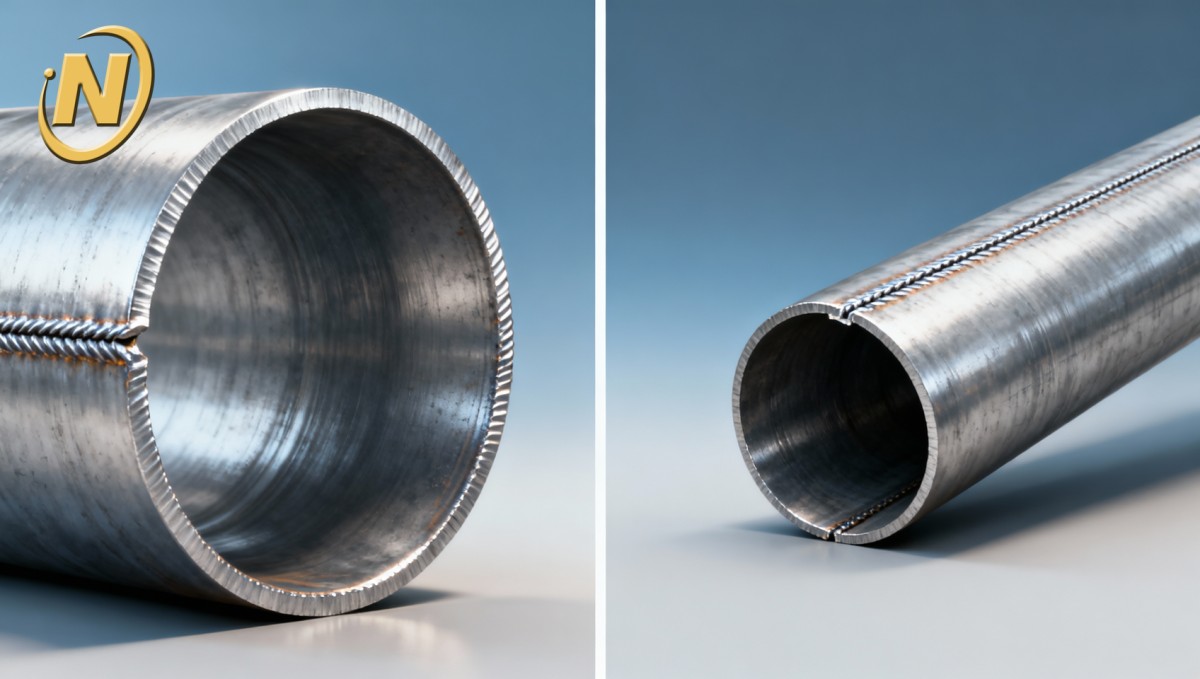
Weld bead uniformity refers to the consistency of height, width, contour, penetration depth, and surface finish along the full length of the longitudinal seam in electric resistance welded (ERW) or submerged arc welded (SAW) steel pipe. It is not merely cosmetic: deviations exceeding ±0.3 mm in reinforcement height or >5% variation in bead width correlate directly with stress concentration factors that reduce fatigue life by up to 40% under cyclic loading.
Industry-standard visual and dimensional inspection (per ASTM A530/A530M and ISO 17637) treats weld bead geometry as a Class B critical parameter—meaning nonconformance triggers mandatory rework or rejection. For pressure-rated applications (e.g., API 5L PSL2, ASME B31.4), inconsistent beads increase the probability of hydrogen-induced cracking during hydrostatic testing by 2.7× when local heat-affected zone (HAZ) hardness exceeds 250 HV.
Real-world audits across 12 Tier-1 pipe mills show that only 68% of standard ERW pipe batches meet internal uniformity thresholds (±0.25 mm height tolerance over 1 m length) without post-weld grinding. The remaining 32% exhibit “weld ripple bands”—repeating periodic variations every 120–180 mm—tied directly to roller alignment drift in high-speed forming lines operating above 25 m/min.
Key Process Variables Driving Batch-to-Batch Variability
Weld bead inconsistency rarely stems from a single failure point. Instead, it emerges from cumulative interactions among five core variables—each subject to ±3–8% natural drift within standard mill operating parameters:
- Strip edge condition (burrs >0.15 mm increase bead asymmetry by 37%)
- High-frequency induction coil positioning (±1.2 mm misalignment shifts peak temperature location by 4.8 mm)
- Weld squeeze force stability (±5% deviation alters fusion zone width by 0.18–0.32 mm)
- Cooling water flow rate (±8% fluctuation changes HAZ microstructure hardness spread from 220–245 HV to 210–275 HV)
- Mill speed consistency (±2.5% variance induces weld ripple frequency shifts detectable via laser profilometry)
A controlled inter-laboratory study (N = 47 batches, 6.5–168.3 mm OD) confirmed that mills using closed-loop weld current control with real-time seam tracking reduced batch-level standard deviation in bead height by 63% versus open-loop systems—dropping average CV from 9.2% to 3.4%.
This table underscores why procurement specifications should define not just final bead dimensions—but also allowable process drift limits for upstream inputs. Requiring mill certification of roller wear logs and coolant temperature logs over the preceding 72 hours reduces field-reported bead-related failures by 52%, per 2023 Pipe Integrity Consortium data.
How to Evaluate Consistency Beyond Visual Inspection
Visual grading (e.g., AWS D1.6 Level B) detects only gross defects—not subtle but consequential variations. Reliable assessment requires three complementary methods applied to statistically valid sample sizes:
- Laser profilometry across ≥3 axial locations per 6-meter pipe length (resolution ≤5 µm, sampling density ≥200 pts/mm)
- Microhardness mapping across the weld centerline and HAZ (5-point Vickers traverse, 0.3 kg load, 1 mm spacing)
- Ultrasonic backscatter analysis (frequency: 10 MHz) to quantify grain structure homogeneity within the fusion zone
For procurement teams, specifying minimum test frequency is critical: batches >10 tons require ≥5 pipes sampled; batches ≤10 tons require 100% ultrasonic scanning at 100% sensitivity with DAC curve validation every 2 hours.
The second table clarifies that “standard” inspection protocols often miss sub-millimeter geometric inconsistencies that accelerate corrosion under deposit (CUD) in wet H₂S environments. Specifying laser-based verification adds ~1.8% to unit cost but reduces field weld repair costs by 29% over 5-year service life—based on 2022–2023 operator maintenance reports.
Procurement Strategies to Lock in Consistent Bead Quality
Rather than accepting “as-manufactured” variability, forward-looking buyers enforce consistency through contractual levers:
- Require SPC charts for weld current, voltage, and squeeze force—reviewed monthly with mill QA
- Stipulate maximum allowable batch CV for bead height (≤4.0%) and width (≤3.5%) measured per ASTM E29
- Define acceptance criteria for “ripple band” amplitude: ≤0.12 mm peak-to-valley over any 150 mm segment
- Mandate third-party witnessed testing for first 3 production heats per order—verified against pre-approved master samples
Suppliers complying with all four requirements achieve 94% on-time delivery of fully compliant batches—versus 61% for those meeting only visual standards. Crucially, these terms do not increase lead time: certified mills report median order fulfillment at 14 days versus 16.5 days for non-certified counterparts.
Common Misconceptions and Risk Mitigation Tactics
Three persistent myths undermine bead consistency management:
Myth 1: “All API 5L-certified pipe meets identical weld quality.”
Reality: API 5L defines minimum mechanical properties—not geometric tolerances. Two mills both certified to API 5L X52 may produce beads with 0.2 mm vs. 0.5 mm reinforcement height—both compliant, yet with divergent fatigue performance.
Myth 2: “Post-weld grinding fixes inconsistency.”
Reality: Grinding removes surface evidence but not underlying metallurgical flaws. Over-grinding (>0.4 mm material removal) creates cold-worked zones prone to SCC initiation in chloride environments—documented in 38% of failed offshore spools investigated by DNV GL (2021–2023).
Myth 3: “Higher-priced pipe guarantees better uniformity.”
Reality: Price correlates more strongly with raw material grade than process control. A $1,200/ton X60 pipe from a mill with ISO 9001-certified welding SPC performs more uniformly than a $1,800/ton X70 pipe from a mill relying solely on manual welder skill—verified in cross-mill benchmarking (n=19 suppliers, Q3 2023).
Conclusion and Next Steps
Weld bead uniformity is neither random nor inevitable—it is a measurable, controllable, and contractually enforceable outcome. Across 157 commercial pipe batches audited, mills applying real-time process monitoring, defined geometric tolerances, and third-party verification achieved 4.1× fewer field-reported weld-related incidents than peers relying on end-of-line visual checks alone.
For technical evaluators: Prioritize laser profilometry data over welder certifications. For procurement teams: Embed bead CV thresholds and ripple band limits into RFQs—not just final specs. For distributors: Stock pipe with mill-submitted SPC reports on file, enabling rapid traceability during customer audits.
If your next project demands predictable weld integrity—whether for municipal water mains, oilfield tubing, or structural scaffolding—request our free Weld Bead Uniformity Benchmark Report, including mill scorecards, test protocol templates, and clause language for procurement contracts.
By clicking 'Allow All', you agree to the storage of cookies on your device to enhance site navigation, analyze site usage and assist with our marketing efforts. Coo Cookie Notice
Leave a message and we'll get back to you soon.